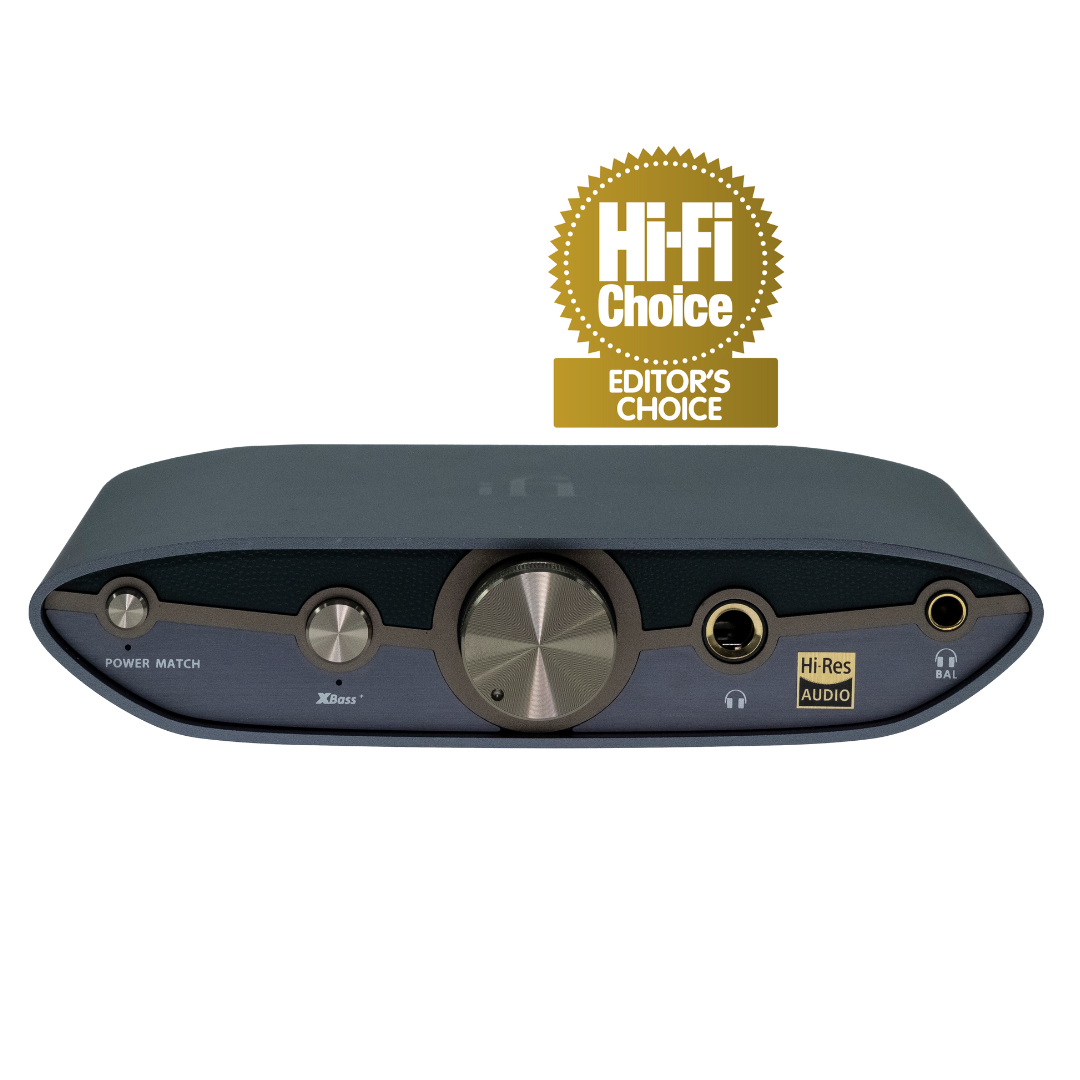
The iFi ZEN DAC V3 occupies a unique niche in the 2026 desktop audio market. While other manufacturers like Topping, FiiO, and SMSL pursue purely analytical specifications—lowest THD, widest dynamic range, most compact footprint—iFi consistently leans into a different design philosophy: musicality, warmth, and the implementation of proprietary features like analog bass enhancement and variable output capability.
The V3 is a refinement of a product platform that iFi has polished through three generations. Does this third iteration offer a meaningful leap, or is it a minor revision of a known formula?
Specifications
| Spec | Value |
|---|---|
| DAC Chip | Burr-Brown True Native chipset |
| Output Power | Up to 390mW at 32Ω |
| SNR | > 113 dB |
| THD+N | < 0.0015% |
| Outputs | 6.35mm (unbalanced), 4.4mm (balanced) |
| Inputs | USB-C |
The Burr-Brown True Native chipset is the heart of the ZEN DAC series. Unlike the delta-sigma chips used by Topping or SMSL, Burr-Brown designs emphasize high linearity and a specific “musical” character that aligns with iFi’s house sound. It is a lower-measurements-focused choice than the latest ESS or AKM chipsets, but iFi’s engineering goal here is sonic signature, not just raw technical specs.
Design and Build
The V3 maintains the signature ZEN form factor—a curved, extruded aluminum chassis that’s distinctive in a sea of rectangular boxes. It feels solid and high-quality, though the controls (the volume knob and the mode buttons) are plastic rather than metal. The V3 feels more industrial and robust than the V2, with a tighter knob and better-positioned inputs.
The front panel layout remains functional: volume, input/output options, and the signature “PowerMatch” and “XBass” buttons. The PowerMatch button optimizes gain for sensitive vs. power-hungry headphones, and the XBass button is iFi’s classic analog bass boost—a feature that continues to set the ZEN DAC apart from competitors.
Sound Signature
The “iFi House Sound”
If you are looking for an ultra-neutral, clinical, transparent device, look at Topping or SMSL. The iFi ZEN DAC V3 has character. It is warm, lush, and undeniably musical. It doesn’t present detail as a sharp-edged texture; it integrates it into a smoother, more flowing presentation.
Bass and XBass
The bass is full and weighty. Even without the XBass button, the ZEN DAC V3 leans toward the warmer side of neutral. With XBass enabled, the low-end boost is noticeable and expertly implemented—it doesn’t muddy the midrange or compress the soundstage; it adds a physical foundation to the low frequencies. For bass-deficient headphones, this is a genuine performance feature.
Midrange and Treble
The midrange is rich and forward, giving vocals a sense of physical weight and intimacy. The treble is well-extended but smooth, avoiding the aggressive, fatiguing high-frequency energy that analytical DACs can produce. It’s perfect for long sessions—the kind of headphone setup you can leave on for four hours without feeling like you need a break.
Soundstage
The ZEN DAC V3 presents an intimate, focused soundstage. It doesn’t stretch the music out in the way a reference desktop stack might, but it creates a coherent sense of depth. Instruments have presence and texture, and the presentation feels “human” rather than clinical.
Key Features
- Analog Bass Enhancement (XBass): iFi’s analog-domain bass boost remains the most natural-sounding bass enhancement in the market. It doesn’t muddy the sound; it provides genuine, usable weight.
- PowerMatch Gain: A straightforward gain toggle that optimizes the ZEN DAC V3’s performance for sensitive IEMs versus higher-impedance dynamic driver headphones.
- Variable/Fixed Output: The ZEN DAC V3 can function as a dedicated DAC (for an integrated amp or external headphone amp) or as a pre-amplifier (using the volume knob to control active monitors). This dual utility makes it a versatile desktop center.
Who Should Buy the ZEN DAC V3?
- Listeners who prioritize musicality, warmth, and non-fatiguing sound over technical neutrality
- Those who enjoy music for long sessions and want a headphone setup that rewards that experience
- Users of neutral or slightly lean headphones (like some Beyerdynamic models) who want to introduce warmth and bass weight
- Listeners who appreciate features like analog bass boost (XBass)
- Users who need a DAC/amp that functions as a flexible pre-amplifier for active monitors
Who Should NOT Buy the ZEN DAC V3?
- Those looking for the absolute lowest THD+N or widest dynamic range—look at Topping or SMSL
- Professional mixing/mastering engineers who need an uncolored, surgically accurate reference tool
- Listeners who prefer a clinical, hyper-revealing sound signature
- Users with extremely difficult-to-drive headphones—the 390mW output is capable but not a powerhouse
Pros & Cons
Pros:
- Distinctive, musical sound signature that rewards long-form listening
- XBass analog bass boost is a genuinely useful feature, not a gimmick
- Flexible functionality (DAC/Pre-amp mode switch)
- Sturdy, distinctive chassis design
- Burr-Brown chip provides a non-fatiguing, natural sound character
Cons:
- Analytical performance (SNR, THD) trails the competition
- Plastic controls on an otherwise metal device feel slightly cheap
- Limited power output compared to pure desktop amplifiers
- Warm signature may not be for everyone
Frequently Asked Questions
Q: Is the V3 a big leap from the V2?
It’s a refinement. The core sound character is the same, but the jitter reduction and the refined power delivery system make the V3 slightly cleaner and more precise than the V2. It’s not an upgrade that makes the V2 obsolete, but it’s a better overall product.
Q: Why would I choose the ZEN DAC over a cleaner-measuring DAC?
Because the goal isn’t just to measure perfectly; it’s to enjoy music. The iFi sound is intentionally engineered for musical engagement. If you find clinical, neutral stacks fatiguing or “boring,” iFi’s approach to the ZEN DAC will likely be the solution you’re looking for.
Conclusion
The iFi ZEN DAC V3 continues the ZEN DAC series’ legacy as the champion of desktop musicality. It chooses a different path than its competitors, favoring warmth, body, and user-friendly features like analog bass enhancement over the raw, purely analytical measurements favored by the competition. For listeners who want a headphone setup they can live with for hours every single day, the V3 delivers a quality of engagement that cleaner-measuring alternatives sometimes lose. It’s a tool for music lovers, and it succeeds exactly where it intends to.