Walk into almost any recording studio, broadcast booth, or music production classroom, and you’ll find one or both of these headphones in active use. The Beyerdynamic DT 770 Pro and the DT 990 Pro are the two most ubiquitous professional headphones in the world — not because they’re the absolute best at anything in particular, but because they do their specific jobs extremely well and they are built to last for decades.
They look nearly identical. They share the same headband design, the same driver heritage, the same velour earpads, and the same Beyerdynamic manufacturing quality. But they serve fundamentally different purposes, and buying the wrong one for your use case is a mistake worth avoiding.
The Fundamental Difference: Open vs. Closed
The defining distinction is not sound signature, price, or comfort — it’s acoustic design.
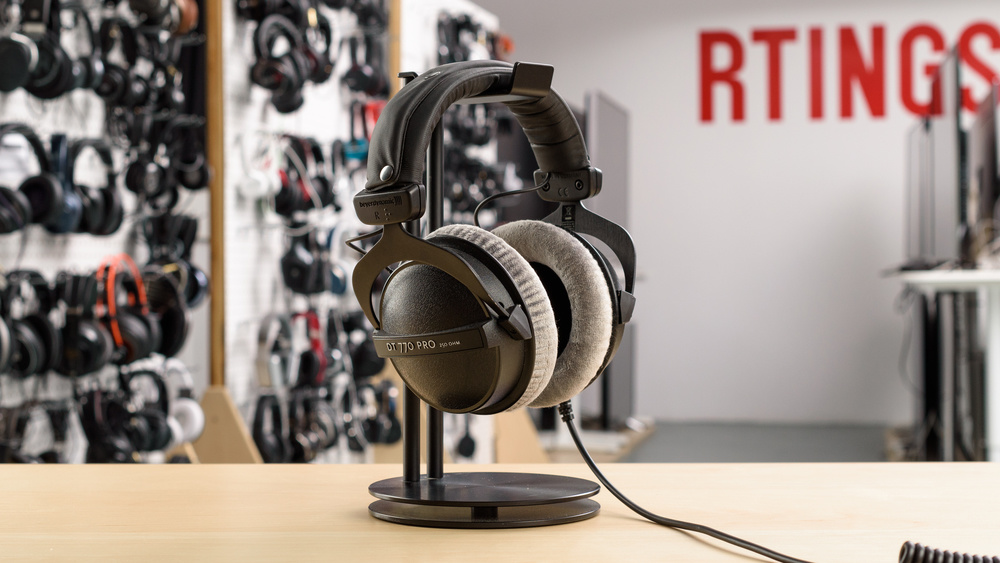
The DT 770 Pro is closed-back. The rear of the earcups is sealed, which means:
- Sound doesn’t bleed out into the room (essential for studio recording)
- Outside noise is partially blocked (useful in noisy environments)
- The soundstage is more intimate and contained
- Bass frequencies have slightly more punch due to the acoustic chamber effect
The DT 990 Pro is open-back. The rear grilles are open, which means:
- Sound bleeds freely in both directions (problematic near microphones)
- No meaningful noise isolation
- The soundstage is wider, more natural, and speaker-like
- Bass is tighter and less colored by rear-chamber resonance
This single difference determines the right choice for most people, regardless of sound preference. Let’s dig into each individually.
Beyerdynamic DT 770 Pro — Closed-Back Reference
Driver type: 45mm dynamic
Available impedances: 32Ω, 80Ω, 250Ω
Sensitivity: 96 dB SPL (250Ω version)
Frequency response: 5Hz – 35,000Hz
Weight: ~270g
Sound Signature
The DT 770 Pro has a V-shaped sound signature — elevated bass, relatively smooth midrange, and bright, extended treble. This is the Beyerdynamic “house sound” that engineers and music lovers have been either loving or learning to tolerate for over three decades.
Bass: The closed-back design gives the bass extra body. The low frequencies have impact and weight that feels satisfying on bass-heavy music — hip-hop, electronic, film scores. The bass is not muddy or bloated; it’s controlled and defined, but it is clearly emphasized relative to a flat response. Sub-bass extension is excellent, reaching convincingly deep on music that demands it.
Midrange: The midrange is the V-shaped “valley” — it’s slightly recessed relative to the bass and treble. Vocals and lead instruments are present and clear but sit slightly behind the low and high frequencies. For studio tracking (recording, not mixing), this is often fine — you’re not trying to make mixing decisions from tracking headphones. For critical listening of vocal-heavy music, the slight midrange recession may bother detail-oriented listeners.
Treble: The DT 770 Pro’s treble is bright and detailed, with Beyerdynamic’s characteristic clarity in the upper presence range. Cymbals, acoustic guitar attack, and string overtones are all clearly articulated. The well-documented Beyerdynamic treble peak around 10kHz is present here — for most listeners, it adds excitement; for treble-sensitive listeners, it can become fatiguing over long sessions.
Soundstage: For a closed-back headphone, the DT 770 Pro has an above-average soundstage. It’s not going to sound like speakers in a room, but it doesn’t feel suffocatingly narrow like many competing closed-back designs.
The Impedance Question
The DT 770 Pro comes in three versions: 32Ω, 80Ω, and 250Ω. This matters practically.
- 32Ω: Designed for phone and portable use. Lower output impedance sources, mobile devices, laptop headphone jacks. Bass is the most pronounced in this version.
- 80Ω: The most balanced version. Works well with mid-tier portable and desktop sources. The common choice for home studio use.
- 250Ω: Designed for professional studio interfaces and desktop amplifiers. Don’t buy this version without a proper amplifier — from a phone or laptop, it will sound thin and quiet.
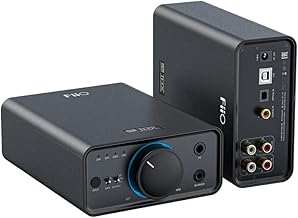
If you don’t have a dedicated amplifier and don’t plan to buy one, the 32Ω or 80Ω versions are safer choices. If you have a FiiO K7, a Topping DX3 Pro+, or a Scarlett interface, the 250Ω version will reward you with the most controlled, refined performance.
Who It’s For
The DT 770 Pro is the right choice for:
- Studio tracking: Recording vocals, guitar, drums — any situation where headphone bleed into a microphone would ruin a take
- Broadcast and podcast work: Monitoring yourself while on air in an environment with ambient noise
- Commuting and public spaces: Better isolation than most consumer closed-backs
- Long sessions requiring isolation without exhausting treble peaks
Beyerdynamic DT 990 Pro — Open-Back Reference
Driver type: 45mm dynamic
Available impedances: 250Ω (primary); 32Ω and 80Ω versions also exist
Sensitivity: 96 dB SPL
Frequency response: 5Hz – 35,000Hz
Weight: ~250g
Sound Signature
The DT 990 Pro is more V-shaped and more energetic than the DT 770 Pro. The open-back design removes the rear acoustic chamber, which tightens the bass and allows for a dramatically wider soundstage. The result is a headphone that feels more airy, more spacious, and more exciting than its closed-back sibling.
Bass: The DT 990 Pro’s bass is still elevated — this is a Beyerdynamic V-shaped tuning — but it’s tighter and more precise than the DT 770 Pro’s. Without the sealed chamber, the rear-wave of the driver is vented, which reduces the thickening effect. Bass has good extension and impact while remaining defined. It’s faster and more articulate than the 770, though slightly less weighty.
Midrange: Similar to the DT 770 Pro, the midrange is somewhat recessed — the price of the V-shaped tuning. Vocals are clear and present, but they sit slightly behind the bass and treble in the mix. For music genres where this matters less (electronic, rock, soundtracks), this is rarely a problem. For vocal-focused listening, it’s worth being aware of.
Treble: The DT 990 Pro’s treble is notably brighter than the DT 770 Pro’s. The well-documented Beyerdynamic high-frequency energy is more prominent here, particularly around 8–10kHz. This is simultaneously the most praised and most criticized aspect of the DT 990 Pro. For FPS gaming, it’s responsible for the sharp, crisp imaging that makes footsteps and gunshots feel immediate and directional. For treble-sensitive listeners or those who listen at high volumes, it can be fatiguing. This is not a headphone for people who are bothered by bright, “sparkly” treble.
Soundstage: The DT 990 Pro’s soundstage is its most celebrated attribute. It is wide — very wide — and the imaging is precise enough to place instruments and sounds consistently in a three-dimensional space. For studio mixing in a headphone context, this is useful. For gaming, it’s exceptional: the combination of wide stage and sharp imaging makes positional audio in FPS games genuinely competitive. The DT 990 Pro has been a go-to recommendation in gaming communities for years for exactly this reason.
Who It’s For
The DT 990 Pro is the right choice for:
- Mixing engineers in quiet studio environments where microphone bleed isn’t a concern
- Casual listening at home in a quiet room — the soundstage transforms how music feels
- FPS gaming — the wide stage and precise imaging are a genuine performance advantage
- Audiophile beginners transitioning from consumer headphones who want immediate, exciting performance
Direct Comparison: DT 770 Pro vs DT 990 Pro
| Feature | DT 770 Pro | DT 990 Pro |
|---|---|---|
| Acoustic design | Closed-back | Open-back |
| Soundstage | Narrow-medium | Wide |
| Bass character | Punchy, slightly warm | Tight, precise |
| Treble | Bright | Very bright |
| Isolation | ~15-20 dB passive | None |
| Best use case | Recording, isolation, portable | Mixing, gaming, home listening |
| Impedance options | 32/80/250Ω | 32/80/250Ω (250Ω most common) |
Which Should You Buy?
Choose the DT 770 Pro if:
- You’re recording audio — vocals, podcasts, instruments — and need to prevent microphone bleed
- You need noise isolation in a shared or noisy environment
- You want a headphone you can use both at home and on the move
- You prefer fuller, slightly warmer bass over analytical tightness
Choose the DT 990 Pro if:
- You’re mixing or doing critical listening in a quiet room
- You primarily use headphones for gaming and want competitive positional audio
- You want the widest possible soundstage experience
- You’re going to use them exclusively at a desk with an amplifier
A note on the 250Ω versions: Both headphones have 250Ω variants that are the most refined-sounding but require a proper amplifier. Without a FiiO K7 or a Topping DX3 Pro+, stick to the 32Ω or 80Ω versions for portable or low-powered sources.
Comfort and Build
Both headphones share the same fundamental construction: a steel headband with self-adjusting leather contact points, plush velour earpads, and a single-sided cable exit. The build quality is exceptional — Beyerdynamic manufactures in Germany, and these headphones are designed to be serviced and repaired rather than thrown away. Replacement pads, headbands, cables, and even drivers are available as genuine parts. This is a headphone you can buy and realistically use for ten years.
Comfort is outstanding on both. The velour pads are soft, breathable, and don’t create the heat seal that leatherette pads cause. The clamping force is firm enough to stay in place but doesn’t cause pressure hotspots. Long studio or gaming sessions of 4–6 hours are manageable on both designs.
Frequently Asked Questions
Q: Can I use the DT 990 Pro for recording vocals? A: Not practically. The open-back design means your microphone will pick up everything coming out of the headphones — your click track, your reference mix, all of it. For recording, use the DT 770 Pro.
Q: Is the DT 990 Pro treble peak fixable with EQ? A: Yes — and it’s one of the most EQ-amenable headphones in this class. A modest reduction at 8–10kHz smooths the presentation significantly without damaging the soundstage or imaging. This is a well-documented and easily implemented EQ preset in any playback software.
Q: Which is more “audiophile”? A: The DT 990 Pro is generally considered the higher-fidelity option for critical listening due to the more natural, speaker-like open-back presentation and wider soundstage. The DT 770 Pro prioritizes isolation and function over pure sonic transparency.
Conclusion
These two headphones have been getting recommended for decades because they do what they do reliably, durably, and honestly. The choice between them is almost entirely determined by use case: if you need isolation and are doing any kind of recording, get the DT 770 Pro. If you’re sitting in a quiet room and want the best possible soundstage for mixing, gaming, or music listening, get the DT 990 Pro. Both are worth every penny — just make sure you’re buying the right one.
For more, read our Best Audiophile Headphones for Gaming 2026 to see how the DT 990 Pro stacks up against dedicated gaming headphone alternatives.