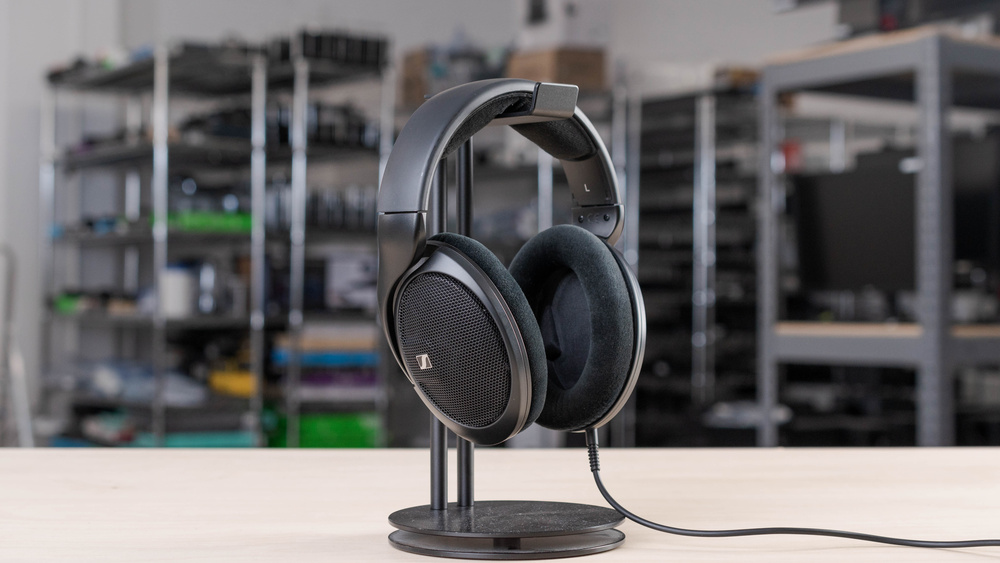
There is a certain type of headphone that audiophile communities quietly regard as the honest, unglamorous workhorse — the tool that does what it’s supposed to without demanding attention or reverence. The Sennheiser HD 560S is exactly that type of headphone. It doesn’t have the pedigree of the HD 600 or the cult status of the HD 650, but in 2026, at its price point, it may be the most technically correct recommendation Sennheiser makes.
In the under-$200 bracket, the HD 560S competes against a sea of consumer headphones and a few genuinely good audiophile options. This review explains why it leads that pack — and why it might not be right for you.
Specifications
- Driver type: 38mm dynamic driver, open-back
- Impedance: 120Ω
- Sensitivity: 110 dB (1Vrms)
- Frequency response: 6Hz – 38,000Hz
- Weight: ~240g
- Earcup style: Over-ear (circumaural)
- Cable: Detachable 3m straight, 6.3mm adapter included
The driver size and transducer design are adapted from Sennheiser’s higher-end 600-series technology — this isn’t a budget driver that happens to have a Sennheiser badge. The 120Ω impedance sits between the very easy-to-drive and the demanding 300Ω options, making the HD 560S a practical middle ground.
Sound Signature
The HD 560S follows a neutral-to-slightly-bright tuning that aligns closely with the Harman over-ear target. It’s not the warmest headphone you’ll find, and it doesn’t have the smooth, forgiving character of the HD 650. Instead, it is honest: if a recording sounds harsh, it will tell you. If a recording sounds beautiful, it will let you hear everything that makes it so.
Bass
The bass on the HD 560S is extended and natural, with reasonable sub-bass presence down to around 20Hz, though the emphasis is on accuracy rather than impact. There’s no bass boost, no shelf, no consumer-style enhancement. Bass lines are defined and textured — you can hear the individual character of each note in a bass guitar run or the pitch of a kick drum — but if you’re looking for visceral impact or warmth, this isn’t it. For mixing or critical listening purposes, the bass is exactly right. For casual bass-head listening, it will feel thin.
Midrange
The midrange is where the HD 560S genuinely impresses. Vocals — both male and female — are rendered with excellent clarity and natural timbre. Acoustic instruments have a realistic, woody character without artificial warmth adding coloration. The upper midrange has a slight presence peak that keeps the sound open and forward, which improves the sense of immediacy without making it aggressive. This is a similar philosophy to Sennheiser’s more expensive offerings — an honestly reproduced midrange that doesn’t flatter or distort.
Treble
The treble is bright by most standards, which is consistent with the Harman target tuning. Cymbal detail, high-hat articulation, and string overtones are all clearly rendered. There is a mild 7–9kHz elevation that makes some listeners consider it fatiguing on longer sessions — this is the HD 560S’s most polarizing characteristic. Treble-sensitive listeners may find it borderline. Those who prefer detail and air over smoothness will appreciate it. On well-recorded, well-mastered music, the treble extension is a genuine strength.
Soundstage and Imaging
Being an open-back design, the HD 560S has natural, convincing soundstage extension. It’s not the widest stage in its class — the Beyerdynamic DT 990 Pro and the HiFiMAN Sundara both have broader staging — but it has excellent imaging precision. Instrument placement is defined and stable, which makes it a good choice for critical listening of complex arrangements. For gaming, the imaging is actually strong enough to be a meaningful advantage in FPS titles.
Build Quality and Comfort
Here is where Sennheiser’s value proposition is most apparent. The HD 560S is extremely light at around 240g, which is notably lighter than most open-back competitors. The headband uses Sennheiser’s characteristic auto-adjusting design — no numbered notches, just slip it on and it sits correctly. This works well for most head shapes and feels effortless.
The earpads are soft velour — the same type that Sennheiser has been using on its flagship products for decades for good reason. Velour is breathable, doesn’t create a heat seal, and remains comfortable for hours-long listening sessions. The plastic construction is light but feels deliberately engineered rather than cheap — this is Sennheiser’s standard construction approach, and it has proven durable across their lineup for many years.
The cable is a bit of a compromise: a 3m coiled/straight cable that is practical for desktop use but awkward for anything portable. It terminates in a 3.5mm at the headphone end (single-sided exit, left cup) with a 6.3mm adapter included. Replacement cables are available.
Source Pairing
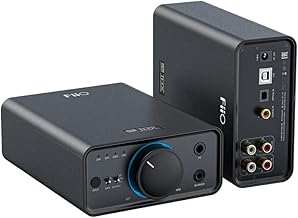
At 120Ω, the HD 560S occupies a practical impedance sweet spot. It’s not as demanding as the 300Ω HD 600 or HD 650, and it doesn’t require a serious amplifier to reach appropriate listening levels. A decent dongle DAC — the Apple USB-C adapter (actually competent), the Moondrop Dawn Pro, or the FiiO KA5 — will drive it well at typical listening volumes. Unlike the Sennheiser HD 650, you don’t need a massive desktop amplifier to bring this headphone to life.
That said, it benefits from a clean source. A low-noise desktop DAC/amp like the Topping DX3 Pro+ or Schiit Hel will provide better instrument separation and a cleaner noise floor than a laptop’s headphone out. If your budget currently doesn’t extend to a DAC/amp, the HD 560S is one of the few audiophile headphones that remains enjoyable without one — that’s a real and practical advantage.
Who Should Buy the Sennheiser HD 560S
Buy this if:
- You’re new to audiophile audio and want an accurate baseline to understand what neutral sounds like
- You mix music and want an honest reference headphone under $200
- You want the open-back experience without needing a dedicated amplifier
- You value comfort for long sessions above all else — the velour pads and light weight are outstanding
- You want something that will work decently from a dongle and scale with better equipment later
Skip this if:
- You want warm, bass-forward, or fun-colored sound — this is explicitly not that
- You’re treble-sensitive and find analytical headphones fatiguing
- You need isolation — it’s open-back, which means noise leaks in and out freely
- You want to impress people with build quality — the plastic construction won’t feel premium in hand
Comparing these to the Beyerdynamic DT 990 Pro: if you want a flatter, more analytical response for mixing or critical listening, choose the HD 560S. If you want more V-shaped energy and a wider, airier presentation, the DT 990 Pro has more excitement but less measurement accuracy.
Pros and Cons
Pros:
- Accurate, Harman-target-aligned frequency response — excellent for mixing
- Extremely light and comfortable for long sessions
- Velour earpads don’t cause heat buildup
- Drives acceptably from a dongle without mandating a desktop amp
- Honest, unflattering sound that reveals recording quality accurately
Cons:
- Bright treble can fatigue sensitive listeners over long sessions
- No warmth or bass emphasis — not satisfying for casual listening
- Open-back design offers no isolation whatsoever
- Cable is overly long for desktop use, inconvenient for portable
- Not the most exciting headphone — doesn’t reward casual listening the way warmer headphones do
Frequently Asked Questions
Q: How does the HD 560S compare to the HD 600? A: The HD 600 is warmer, smoother, and more widely praised for vocals and acoustic music. It also costs significantly more and needs a more powerful amplifier (300Ω). The HD 560S is brighter, more analytical, and easier to drive. For someone new to the hobby, the HD 560S actually teaches you more about what neutral sounds like — but experienced listeners often find the HD 600’s warmer character more musically satisfying over time.
Q: Is the Sennheiser HD 560S good for gaming? A: Yes, better than most people expect. The imaging is precise and consistent, which helps with positional audio in competitive FPS games. The open-back design creates a natural, wide soundscape that makes virtual environments feel convincing. The downside is the 3m cable — you’ll want to manage it on a desk setup.
Q: Does it need a DAC/amp? A: Not strictly, but it benefits from one. At 120Ω, it will reach listening volume from most phones and laptops. Quality will be appreciably better with a clean external DAC/amp. If you already own a budget DAC/amp, use it. If you’re starting from scratch, don’t let the lack of one stop you from buying the HD 560S — just plan to add a DAC/amp later.
Conclusion
The Sennheiser HD 560S is what a $200 headphone should aspire to be: technically honest, genuinely comfortable, and built by a company that actually understands transducer design. It’s not glamorous, it’s not exciting in the way that bass-boosted headphones can feel exciting out of the box, and it won’t flatter bad recordings. But for anyone who takes music seriously — who wants to hear recordings as they were made — it is one of the most trustworthy tools available at its price point. The “giant killer” label is earned: it outperforms many headphones costing twice as much in the categories that matter for accurate reproduction.