The HiFiMAN Sundara has now been on the market long enough to become something of a reference point — audiophiles routinely evaluate competing headphones by asking “is it better than the Sundara for the same money?” That’s a significant position for any headphone to occupy, and the HiFiMAN Sundara has earned it through a combination of tuning intelligence, driver technology, and a retail price that keeps dropping while the sound quality stays the same.
In 2026, with prices regularly dipping below $300 on sale, the Sundara represents probably the best pure value in mid-fi planar headphones. This review covers the full picture — including the real weaknesses that enthusiast forums sometimes gloss over.
Specifications
- Driver type: Planar magnetic with nanometer-grade diaphragm
- Impedance: 37Ω
- Sensitivity: 94 dB/mW
- Frequency response: 6Hz – 75,000Hz
- Weight: ~372g
- Cable: 3.5mm single-ended, 1.5m
- Earcups: Oval, over-ear, plush synthetic leather + fabric hybrid pads
The planar magnetic driver is the Sundara’s core competency. Unlike dynamic drivers — which use a cone or dome attached to a voice coil — the planar driver consists of an ultra-thin diaphragm with embedded conductive traces, suspended between two arrays of magnets. When current passes through the traces, the entire diaphragm moves as one, rather than relying on a single drive point like a dynamic cone. The practical result is extremely low distortion, excellent transient speed, and bass reproduction that is uniquely textured and tight.
Sound Signature
The Sundara is tuned neutral-to-bright. It doesn’t have the warmth of the Sennheiser HD 600 series, and it’s not V-shaped like the original Beyerdynamic DT 990 Pro. It is designed to be accurate and revealing, with enough high-frequency air to sound open and engaging without becoming fatiguing.
Bass
Planar bass is fundamentally different from dynamic bass, and the Sundara is an excellent demonstration of why that matters. The sub-bass extension reaches down to around 30Hz with real energy — not theoretical -3dB measurement territory, but audible, felt presence on bass-heavy tracks. The key distinction from dynamic headphone bass is texture and control: individual bass notes are defined and separated. A walking bass line in jazz has the distinct timbre of each note. In EDM, kick drums have a tight punch rather than a slow bloom. The Sundara is not the bassiest headphone in this class — it won’t satisfy listeners who want consumer-style bass emphasis — but for accuracy and quality of bass, it’s outstanding.
Midrange
The midrange is where the Sundara is most directly competitive with its dynamic driver rivals. It’s clear and present without being forward or aggressive. Vocals are natural and well-positioned. Acoustic instruments — guitar, piano, violin — have realistic weight and harmonic complexity. The Sundara avoids the thin or hollow midrange character that plagues some planar designs. The upper midrange around 2–4kHz is slightly elevated relative to a dead-flat neutral target, which keeps the presentation open and detailed. This does mean that some guitar-heavy rock recordings, if poorly mastered with harsh upper mids, can feel a little grating.
Treble
The Sundara has a bright treble signature. High-frequency detail is excellent — cymbal shimmer, string overtones, and the “air” around recorded spaces are all clearly rendered. There are a couple of mild peaks in the presence and air regions that can occasionally make sibilants in vocals more prominent than they should be. Treble-sensitive listeners should be aware of this. The flip side is that for acoustic music, jazz, and well-recorded rock, the treble adds liveliness and energy that makes the Sundara an engaging listen rather than a clinical one.
Soundstage and Imaging
This is one of the Sundara’s genuine strengths. The soundstage is wide and tall, extending well beyond the ear cups and creating a convincing sense of space for an around-ear design. Imaging — the ability to pinpoint the location of instruments within that space — is accurate and consistent. Classical orchestral recordings benefit enormously from this; you can reliably separate first and second violin sections, locate the brass behind the strings, and sense the acoustic space of the recording hall. Compared to closed-back alternatives in this price range, the spatial advantage of the Sundara is significant.
Build Quality and Comfort
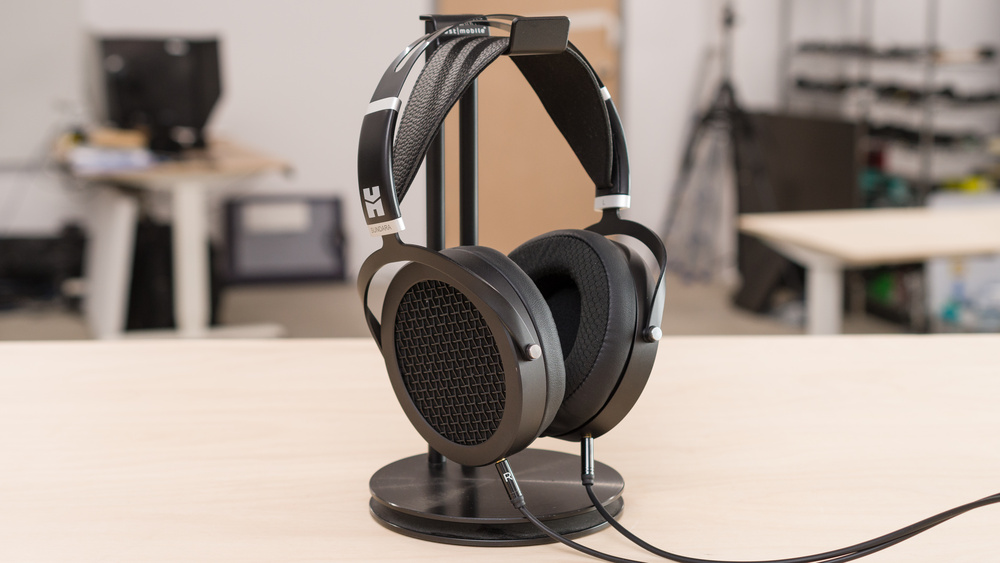
Here is where the Sundara earns its main criticism. HiFiMAN has improved significantly from the nightmare build quality reputation of their early products, but the Sundara still doesn’t feel like a $350 headphone in terms of construction. The headband uses a metal yoke and frame, which is solid, but the adjustment mechanism clicks through positions rather than sliding smoothly, and the housing has a somewhat utilitarian finish. The cups are plastic, though sturdy plastic.
The pads are a hybrid of pleather and fabric — comfortable for extended sessions, with enough clamping force to keep the headphone secure without causing pressure hotspots. The over-ear fit is generous; even listeners with larger ears find the pads enclose fully. At ~372g, the Sundara is on the heavier side — not as heavy as an Audeze LCD-series, but heavier than the Sennheiser HD 600 or Beyerdynamic offerings.
The included cable is a generic 3.5mm affair — functional, not special. It terminates in a 3.5mm single-ended connector and uses dual 3.5mm jacks at the headphone end. Aftermarket balanced cables (4.4mm or XLR) are widely available and improve performance when paired with a balanced source.
Source Pairing
The Sundara’s 37Ω impedance might suggest it’s easy to drive, but the 94dB sensitivity is lower than most competing dynamic headphones, meaning it needs more voltage to reach listening levels. Most smartphones will struggle to drive it to appropriate volumes without running the output near its limit, which degrades quality. A minimum-spec source is a decent dongle DAC — the Qudelix 5K, FiiO KA3, or similar. A desktop DAC/amp like the Topping DX3 Pro+ or Schiit Magni/Modi stack will show you noticeably better dynamics and bass authority than a dongle.
The Sundara responds well to a warm source. It’s already bright; pairing it with a clinical, analytical DAC/amp can push the high-frequency energy slightly too far. A neutral-to-warm pairing — like the iFi Zen DAC or Schiit Asgard — tends to work very well.
Who Should Buy the HiFiMAN Sundara
Buy this if:
- You’ve never heard a planar magnetic driver and want to understand what the technology sounds like
- You listen primarily to rock, jazz, electronic, or acoustic music where transient speed and bass texture matter
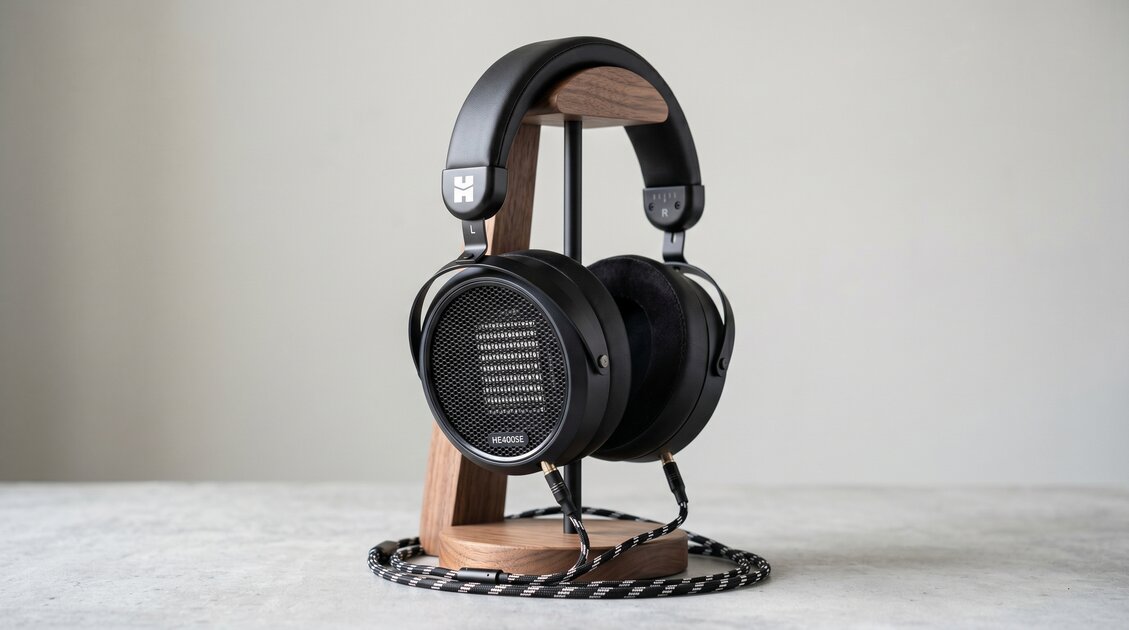
- You’re coming from entry-level headphones like the HiFiMAN HE400SE and want a clear step up in refinement and detail
- You have or are planning to buy a proper DAC/amp to drive it
Skip this if:
- You want warm, smooth, or V-shaped sound — the Sundara is bright, not relaxed
- Build quality is a primary concern — for similar money, the Sennheiser HD 600 or Beyerdynamic DT 900 Pro X feel more substantial
- You plan to drive it from a phone without any external hardware
- You have a tight overall budget and can’t invest in source equipment — the Sundara underperforms when under-driven
Pros and Cons
Pros:
- Exceptional planar magnetic speed and transient response
- Wide, convincing soundstage with accurate imaging
- Outstanding bass texture and control
- Great value for planar technology at current pricing
- Scales well with better amplification and cables
Cons:
- Bright treble — not ideal for treble-sensitive listeners
- Build quality lags behind price peers in terms of feel and finish
- Requires proper amplification to perform at its best
- Heavier than comparable dynamic headphones
- Stock cable is generic and uninspiring
Frequently Asked Questions
Q: How does the Sundara compare to the Sennheiser HD 600? A: They are fundamentally different-sounding headphones. The HD 600 is warmer, smoother, and more midrange-forward — many listeners find it more natural and easy on the ears. The Sundara is brighter, more technically precise in transients, and has wider staging. For classical and vocal music, many prefer the HD 600. For electronic, rock, and anything requiring fast bass, the Sundara often wins. It’s genuinely a matter of tuning preference, not objective quality.
Q: Does the Sundara need a dedicated amplifier? A: Yes, effectively. The 94dB sensitivity means it needs more drive than most phones can cleanly provide. Budget at least $75–100 for a dongle DAC as a minimum. A proper desktop stack like the Schiit Modi/Magni or Topping DX3 Pro+ will reward you with noticeably better dynamics and control.
Q: Is the HiFiMAN Sundara good for gaming? A: Yes, with caveats. The wide soundstage and accurate imaging make positional audio in FPS games genuinely useful — footsteps, gunshots, and directional cues are clearly rendered. The sensitivity means you’ll want an amplifier. And it’s open-back, so if you’re gaming in a shared space, everyone around you will hear your game.
Conclusion
The HiFiMAN Sundara remains the default recommendation for anyone who wants to understand what planar magnetic audio actually sounds like without spending $1,000 or more. The driver technology delivers on its promises: fast, textured bass; clean, extended highs; and a wide, accurate soundstage. The build quality is a legitimate weakness, and the brightness won’t work for everyone. But as a technical achievement at its price point, the Sundara is genuinely hard to beat. If you’re upgrading from the HiFiMAN HE400SE or similar entry-level planars, the jump in resolution and refinement is immediately obvious.
For more context on how the Sundara fits into the broader landscape, read Best Headphones Under $1000 in 2026.