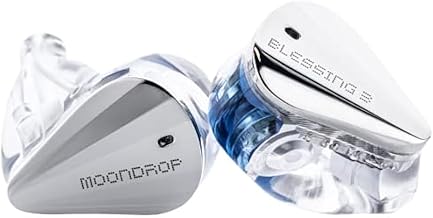
The IEM market in 2026 is arguably the most exciting and competitive segment in all of personal audio. Three years ago, it was difficult to find an in-ear monitor under $200 that competed seriously with a good full-size headphone. Today, Chinese manufacturers have driven prices down and quality up to a degree that has genuinely disrupted the headphone market — there are IEMs at $100 that outperform many $300 full-size headphones in resolution and technical capability.
This guide covers the best audiophile IEMs available in 2026 across different price tiers, with honest assessments of where each earns its place.
Why IEMs in 2026?
The practical advantages of IEMs over full-size headphones are worth stating clearly:
Portability: A pair of IEMs fits in a shirt pocket. A full-size open-back headphone requires a bag, a cable, and a reason to explain yourself to everyone on the train.
Isolation: Well-fitting IEMs provide 25–35 dB of passive noise isolation — better than most active noise-cancelling headphones, without any DSP processing that colors the sound. The isolation is physical, not electronic.
Comfort for glasses wearers: The over-ear fit of full-size headphones presses against eyeglass temples and causes pressure pain over time. IEMs have no such interaction.
Source efficiency: Most IEMs are high-sensitivity and low-impedance designs that play loudly from phones and dongles without requiring a dedicated amplifier stack.
Staging: While IEMs can’t fully replicate the out-of-head presentation of a good open-back headphone, modern multi-driver IEMs have improved staging significantly. The best of them create a surprisingly convincing three-dimensional space.
The trade-off is fit-dependence: an IEM that doesn’t seal properly in your ear canals will lose bass response, reduce isolation, and sound objectively worse. Tip selection matters enormously, and not every IEM works for every ear shape.
1. Moondrop Blessing 3 — The Sub-$500 Benchmark
Configuration: 1DD + 4BA hybrid
Impedance: 22Ω
Sensitivity: 122 dB/Vrms
Frequency response: 5Hz – 40,000Hz
Price: ~$300–350
The Blessing 3 is the reference point for the sub-$500 IEM market. Its hybrid driver configuration — one dynamic driver handling bass and sub-bass, four balanced armature drivers managing mids and highs — achieves the rare combination of coherent, seam-free frequency response with the technical performance of a multi-driver design.
The tuning is neutral-to-bright, following a modified Harman IEM target with a slight upper midrange lift. The result is detailed, transparent, and accurate — not warm, not V-shaped, not bass-boosted. For listeners who want to hear exactly what is in their recording, the Blessing 3 is the correct tool.
The bass is handled by the dynamic driver, which gives it the natural, textured quality that balanced armature bass often lacks. Sub-bass reaches convincingly deep. Midbass is controlled and defined. The midrange is open and clear. The treble has extension and sparkle with a mild 8kHz peak that will bother treble-sensitive listeners on particularly demanding recordings but adds airiness and detail that make most well-mastered music genuinely compelling.
The soundstage for an IEM is surprisingly wide and three-dimensional. The imaging is precise — an important distinction from soundstage — allowing instruments to be confidently located in space.
Build quality: resin shell with a CNC-machined aluminum faceplate. Premium-looking and well-finished. The 2-pin 0.78mm cable is good quality. Tip selection from the stock set is adequate but can be improved.
At 122dB sensitivity and 22Ω impedance, it drives effortlessly from any source. A good dongle DAC improves the experience; a 4.4mm balanced output improves it further. This is not a demanding IEM in terms of source requirements, but it rewards better sources with better staging.
Full review: Moondrop Blessing 3 Review 2026
Best for: Audiophiles who want the best technical IEM under $500, travelers and commuters who want audiophile-grade sound portable, listeners transitioning from full-size neutral headphones.
2. Moondrop Aria 2 / Kato — The Mid-Range Sweet Spot
Price: ~$80–130
The Moondrop Aria 2 (and the closely related Kato) demonstrate how well-designed a single dynamic driver IEM can be in 2026. At $80–100, the Aria 2 delivers a warm-neutral tuning with satisfying bass presence, natural midrange, and smooth treble that simply doesn’t offend. It’s not the most technically precise IEM — the resolution and staging don’t approach the Blessing 3 — but it’s an exceptionally enjoyable listen for casual use, commuting, and everyday music consumption.
The Kato, at $130, steps up to an interchangeable nozzle design (different nozzle materials alter the sound tuning slightly) and a slightly more refined resolution. Both are easy to drive from any source.
For listeners who want a well-tuned, comfortable, daily-carry IEM that sounds far better than any consumer earphone in its price range without demanding a separate DAC/amp, either of these is a natural choice.
Best for: Daily carry, casual listening, anyone new to audiophile IEMs who wants an accessible starting point.
3. Kinera Celest Gumiho / Simgot EA500 LM — The Resolving Budget Options
Price: ~$50–100
The “Chi-Fi” (Chinese Hi-Fi) segment below $100 is overcrowded and difficult to navigate — there are genuinely good IEMs, mediocre IEMs, and outright tuning disasters all sharing similar marketing language. Among the legitimately good options in 2026:
Simgot EA500 LM: A single dynamic driver IEM with a warm-neutral tuning and impressive bass extension for its price. Clean midrange, non-fatiguing treble. Easy to drive, comfortable, and well-built for the cost. A natural entry point for anyone who wants better-than-consumer-grade sound without spending more than $70.
Kinera Celest Gumiho: A more technically ambitious design using a tribrid driver configuration (dynamic + balanced armature + piezoelectric) that pushes resolution and staging beyond what single-DD IEMs can achieve at comparable prices. The tuning is more energetic and V-shaped than the Simgot, which suits listeners who want excitement over accuracy.
These options are the current best-in-class for budget audiophile IEMs — they represent a meaningful step up from consumer earphones without requiring the investment of the Moondrop Blessing 3.
Best for: Budget-constrained listeners who want their first step into audiophile IEM performance, or secondary/backup IEM options for existing enthusiasts.
4. Audeze Euclid / MM-500 — Premium IEM Performance
Price: $500–$1,000+
At the premium tier, Audeze brings their planar magnetic driver technology — the same technology used in their full-size LCD headphone series — into a custom-fit IEM format. The Euclid uses a closed-back planar driver that delivers bass reproduction with the characteristic planar speed and texture at full-size headphone levels of performance, in an IEM form factor.
The staging and imaging on a well-fit Audeze IEM is competitive with the best full-size open-back headphones in the sub-$1,000 range. The bass is Audeze’s defining strength: deep, physical, controlled, and fast. The midrange is clear and natural. The treble is handled differently from the typical balanced armature approach and avoids the upper-frequency sharpness that some premium multi-BA designs exhibit.
The limitation is fit: custom or universal-fit premium IEMs require precise ear canal sealing to perform as measured. If the fit isn’t right, the bass falls off and the soundstage collapses. Professional ear tips (Comply foam, Final Type E) or custom ear impressions are worthwhile investments at this tier.
Best for: Premium portable audiophiles, studio professionals who need IEM-level monitoring with planar bass quality, frequent travelers who want flagship headphone performance without carrying full-size gear.
IEM Buying Guide — What Actually Matters
Fit over everything. The best IEM in the world sounds mediocre if it doesn’t seal in your ear. Before spending more than $50 on an IEM, understand whether you have typical or atypical ear canal dimensions. If you’ve had trouble with IEM fit in the past, look for shorter nozzle designs (Moondrop Kato) or try foam tips (Comply Isolation+) which conform to irregular canal shapes.
Driver count is not quality. Marketing materials love to advertise “8-driver” or “10-driver” configurations. Multiple drivers create crossover design challenges and coherence issues that a well-executed single dynamic driver often avoids. The Moondrop Aria 2 (1 driver) outperforms many 4+ driver IEMs from less competent manufacturers.
Understand the tuning before you buy. Neutral IEMs like the Blessing 3 will initially sound lean if you’re coming from consumer earphones. V-shaped IEMs like the Kinera Gumiho will feel exciting but may fatigue analytical listeners. Read measurements from trusted sources (Crinacle’s IEM database, HypeTheSonics) before committing.
Source matching. Most audiophile IEMs are efficient (high sensitivity, low impedance) and play well from phones. However, highly sensitive IEMs (>110 dB) can exhibit background hiss from DAC/amps with high noise floors. A USB dongle DAC with a known low noise floor (Qudelix 5K, Apple USB-C dongle) is often the safest choice for sensitive IEMs.
If you are tired of carrying around a full headphone setup and want to experience the same resolution and detail in a portable package, the IEM market in 2026 provides genuinely compelling answers. For a deep dive into the current benchmark, read the Moondrop Blessing 3 Review 2026.