The sub-$500 DAC market in 2026 is where the value proposition for audiophile audio is at its sharpest. Chipsets that cost several thousand dollars to implement correctly a decade ago are now accessible in well-engineered units for under $300. The challenge is not finding a good DAC — it is understanding which features and design philosophies actually matter for your specific use case.
This guide covers standalone DACs and DAC/amp combos in the under-$500 bracket. We have tried to give you enough real specification data to compare units objectively, not just marketing copy.
For broader context on how a DAC fits into your full desktop chain, see How to Choose a Headphone Amplifier: The Complete Guide 2026.
Why You Actually Need an External DAC
Your computer’s internal audio — whether it is a dedicated Realtek chip on a motherboard or even Apple’s supposedly capable built-in — shares a PCB with power-hungry components: CPUs, GPUs, RAM modules, voltage regulators. All of these radiate electromagnetic noise that gets picked up by the DAC circuitry. The result is an elevated noise floor, measurable (and audible on sensitive headphones) hiss, and poor channel separation.
An external USB DAC physically isolates the conversion stage from your computer’s electrical environment. Even a modest $50 DAC will outperform most integrated audio on noise floor alone. At $200–$500, the improvement extends to conversion accuracy, frequency response linearity, and dynamic range.
Beyond noise, a quality DAC provides:
- Better dynamic range: Typically 110–120+ dB SINAD vs. 80–90 dB on integrated audio
- Proper jitter rejection: Clock accuracy directly affects imaging and soundstage width
- Flexible input options: USB, optical, coaxial — connect sources beyond your PC
- Correct output voltage: 2V RMS standard output for proper amp interfacing
The Top Picks Under $500
1. iFi Gryphon — The Versatile Powerhouse (~$650, often discounted under $500)
Type: Portable DAC/Amp Combo | Chipset: Burr-Brown TrueBit | Output: 4.4mm balanced + 6.35mm SE + 3.5mm SE Check price on Amazon →
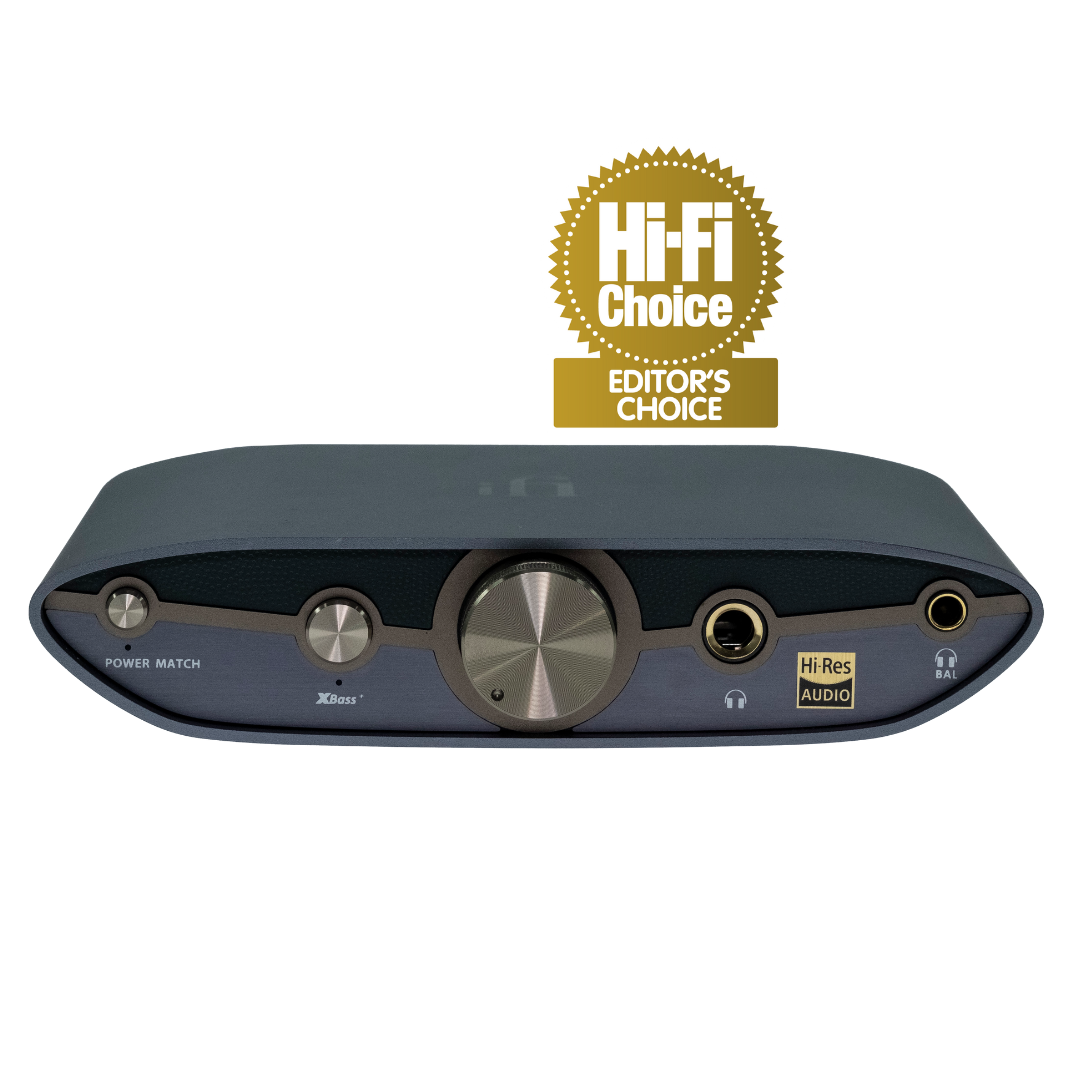
The iFi Gryphon is the most feature-complete device in this bracket. It combines LDAC Bluetooth 5.1, a full desktop-class amplifier, and iFi’s proprietary XBass and XSpace DSP in a unit that fits in a jacket pocket.
Key specs:
- THD+N: < 0.003% (balanced out)
- Output power (balanced, 32Ω): ~1,000 mW
- SNR: > 116 dB (balanced)
- Inputs: USB-C, 3.5mm analog, Bluetooth
- Battery: ~8 hours playback
The Gryphon’s DAC section — based on Burr-Brown architecture with iFi’s bit-perfect upsampling — has a warmer, more analog tonal character compared to the sharper-edged ESS Sabre implementations. For listeners who find ESS-based DACs slightly “clinical,” the Gryphon is a natural correction.
Pairing notes: Works brilliantly with the Sennheiser HD 600 (the warmth complements the HD 600’s slightly polite treble), and provides enough balanced current for planar headphones like the HiFiMAN Sundara.
Best for: Users who want desktop and portable performance from one unit; Bluetooth phone users; planar headphone owners.
2. FiiO K7 — The Desktop Benchmark (~$180)
Type: Integrated Desktop DAC/Amp | Chipset: Dual AK4493SEQ | Output: 4.4mm balanced + 6.35mm SE Check price on Amazon →
Reviewed extensively on this site (FiiO K7 Review), the K7 remains the most recommended under-$200 DAC/amp for good reason. Its dual AKM implementation measures exceptionally well, with a SINAD of ~115 dB and output power of 2,000 mW into 32Ω balanced.
The FiiO K7 is a pure desktop unit — no battery, no Bluetooth — but it accepts USB-C, optical, and coaxial inputs, making it compatible with nearly any source. The front panel gain switch and low/high output mode toggle give it real flexibility across IEMs and full-sized headphones.
Measured specs:
- THD+N: < 0.00056%
- Noise floor: -120 dBr (balanced output)
- Output impedance: < 1Ω
- Frequency response: 20 Hz – 40 kHz (+/- 0.5 dB)
It pairs exceptionally well with the Sennheiser HD 650 — the AKM chip’s slightly warm presentation suits the HD 650’s laid-back midrange, and the balanced output adds texture to the low end.
Best for: First desktop setups; HD 600/650/6XX owners; anyone prioritizing clean measurements and build quality at the lowest possible price.
3. Topping DX3 Pro+ — The Clean Master (~$160)
Type: Integrated Desktop DAC/Amp | Chipset: ESS ES9038Q2M | Output: 4.4mm balanced + 6.35mm SE** Check price on Amazon →
The Topping DX3 Pro+ is the definitive choice for listeners who prioritize measurement performance above all else. Using the ES9038Q2M chip in a well-implemented balanced architecture, it achieves SINAD figures that rival units at twice its price.
The sound character is noticeably different from the FiiO K7 or iFi Gryphon: neutral, precise, and uncolored. There is no warmth added, no smoothing — you hear exactly what the recording contains. This is what audiophiles mean when they say a DAC is “transparent.”
Measured specs:
- SINAD: ~118 dB
- THD+N: < 0.0003%
- Dynamic range: 120 dB (A-weighted)
- Output impedance: < 1Ω
Note that the DX3 Pro+ also has Bluetooth 5.0 with LDAC — a useful addition for phone users.
Pairing notes: Works best with neutral or warm headphones. With bright headphones like the Beyerdynamic DT 1990 Pro, the DX3 Pro+’s neutrality can accumulate into fatigue. Pair it with the Sennheiser HD 560S or HiFiMAN Sundara for a genuinely outstanding sub-$400 full system.
Best for: Measurement-focused audiophiles; listeners who want total transparency; those who plan to EQ heavily and want a neutral baseline.
4. Chord Mojo 2 — The Outlier Choice (~$650, but reference-tier performance)
Type: Portable DAC/Amp | Technology: FPGA-based custom filtering (WTA5)
The Chord Mojo 2 operates on a completely different design philosophy than every other unit in this guide. Rather than using off-the-shelf DAC chips (AKM, ESS, Burr-Brown), Chord implements their DAC conversion entirely in a custom FPGA with a million-tap finite impulse response (FIR) filter. The result is a level of temporal accuracy — the correct reconstruction of transient edges — that DAC chip-based implementations simply cannot match.
In practice, this manifests as improved imaging precision and a more believable sense of instrument placement. The Mojo 2 also adds four-element programmable DSP equalization over the original Mojo.
It is not the most convenient unit (proprietary charging, 3.5mm outputs only, quirky ball UI), but if you can find it on sale under $500, it is a reference-grade purchase.
Best for: Audiophiles who want the best-sounding unit regardless of feature count; listeners particularly sensitive to imaging and soundstage coherence.
Why a Good DAC Lasts Through Multiple Headphone Upgrades
One of the most important practical points about investing in a quality DAC/amp: it becomes your foundation. When you eventually upgrade from a Sennheiser HD 650 to an HD 800S, or from a HiFiMAN Sundara to an Arya, your source chain does not need to change. The gains from a better DAC compound over every headphone you will ever own.
Spending $200–$500 now on a quality DAC/amp is the most efficient investment in the entire audiophile chain. A $300 DAC + $150 headphones sounds better, and teaches you more, than a $450 headphone plugged into a laptop.
Pros & Cons Summary
| Product | Strength | Weakness |
|---|---|---|
| iFi Gryphon | Versatility, portability, Bluetooth | Price, complexity |
| FiiO K7 | Value, power, build | No portability |
| Topping DX3 Pro+ | Measurement performance | Neutral-only, no warmth |
| Chord Mojo 2 | FPGA precision, imaging | Price, proprietary port, no balanced out |
FAQ
Q: Do I need a separate DAC and amp, or can I use an all-in-one? For most people, an all-in-one unit (like the FiiO K7 or Topping DX3 Pro+) is the right choice. A separate stack gives you more upgrade flexibility — you can replace the DAC without replacing the amp and vice versa — but the performance difference at this price tier is negligible. Start with an all-in-one.
Q: Does the DAC chip brand (AKM vs ESS) actually matter? The chip implementation matters more than the chip itself. A well-designed AKM circuit will outperform a poorly designed ESS circuit. That said, AKM tends toward a slightly warmer, more musical presentation; ESS tends toward strict neutrality. If you are sensitive to tonal character, it is worth considering — but do not let chipset marketing dictate your purchase.
Q: Will a better DAC improve my streaming music quality? A better DAC improves the quality of whatever signal it receives. Streaming at standard Spotify bitrates will sound better through a quality DAC than through integrated audio. However, the improvement is smaller than the improvement from using a lossless source (Tidal, Apple Music Lossless, local FLAC files). A good DAC rewards good sources.
Conclusion
The under-$500 DAC market in 2026 is excellent. For most audiophiles starting their desktop journey, the FiiO K7 is the no-compromise recommendation: powerful, well-measured, balanced output, and priced where it does not hurt. For portability and versatility, the iFi Gryphon is the best single device in the category. For measurement purists, the Topping DX3 Pro+ is the choice. All three will pair well with flagship headphones like the Sennheiser HD 650 and serve you through years of headphone upgrades.