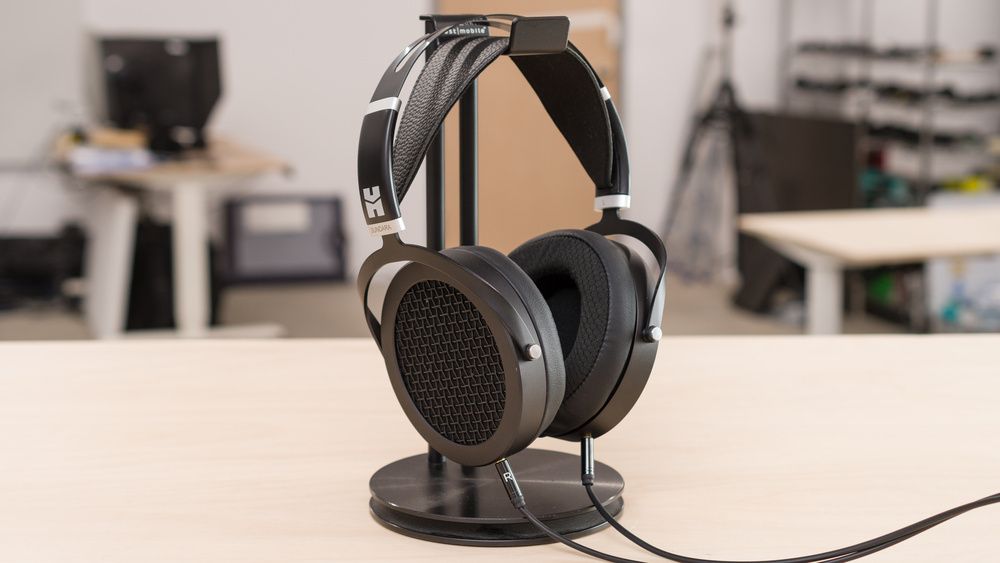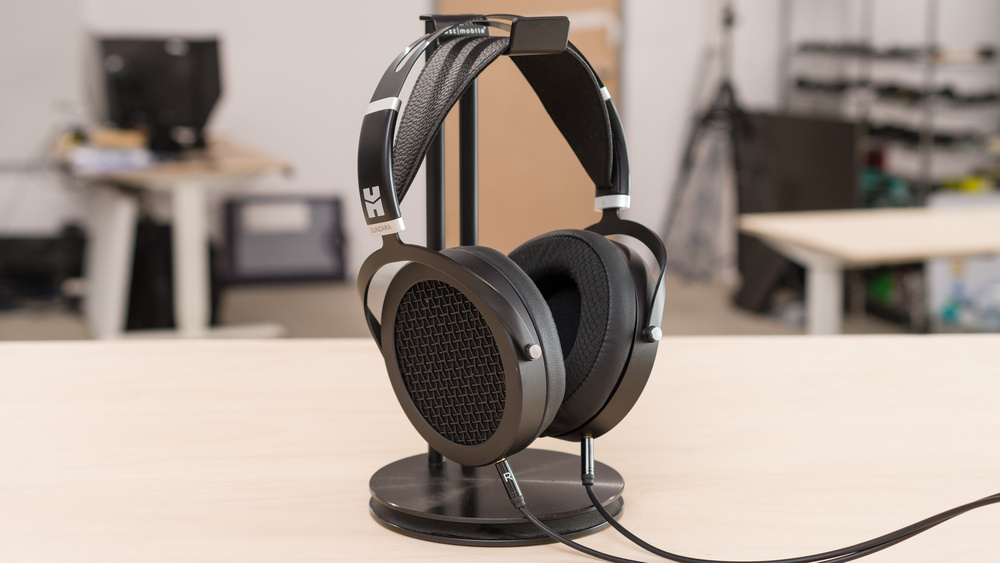
Balanced headphone cables occupy an interesting space in audiophile culture. On one side: the boutique cable market, where copper treated with NASA-adjacent marketing processes costs $500 for a meter of wire. On the other: the “cables don’t matter” crowd who insist any properly terminated cable sounds identical.
The truth, as usual, is more useful than either extreme.
A balanced headphone connection is a genuine technical benefit. The improved noise rejection, higher voltage swing, and elimination of the common-ground problem all contribute to measurably better performance — particularly at the amplifier end. The cable itself matters far less than the connection type, but material quality, construction, and termination reliability do affect long-term ownership experience.
This guide covers what balanced actually means, which terminations to care about, and which cable options in 2026 are worth buying — without spending $400 on boutique wire.
What “Balanced” Actually Means for Headphone Cables
In audio, “balanced” refers to a signal transmission method that carries the audio signal on two conductors with opposite polarity (positive and negative), plus a separate ground. The receiving device subtracts one signal from the other, which cancels any noise that was picked up equally by both conductors (common-mode noise rejection).
For headphones, a fully balanced connection requires:
- A DAC/amp with a balanced output (4-pin XLR, 4.4mm Pentaconn, or 2.5mm TRRS)
- A headphone with independent left and right channel connections (most over-ears can be recabled)
- A cable that runs four separate conductors: left positive, left negative, right positive, right negative
Standard 3.5mm or 6.35mm (Single-Ended) vs. Balanced
| Parameter | Single-Ended | Balanced |
|---|---|---|
| Conductors | 3 (L+, R+, common ground) | 4 (L+, L−, R+, R−) |
| Crosstalk | Higher | Lower (channels fully separated) |
| Max voltage swing | 1× | 2× (from same rail voltage) |
| Common-mode noise rejection | None | Yes (CMRR) |
| Power output | Base | Typically 4× the SE power (same amp) |
The power difference is the most practically significant: many amplifiers output 4× as much power in balanced mode as single-ended. For demanding headphones, this is the difference between adequate and exceptional dynamic performance.
Balanced Connector Types in 2026
4.4mm Pentaconn (TRRRS)
Currently the most common balanced headphone output on desktop and portable DAC/amps. Introduced by Sony, adopted widely by FiiO, HiBy, Shanling, Astell&Kern, and others. 5-contact design supports either stereo balanced headphones or balanced line output.
Verdict: This is the connector to prioritize for new purchases in 2026. The most universal balanced termination.
4-pin XLR
Standard for desktop amplifiers. Four separate pins for L+, L−, R+, R−. Robust, locking connector. Not suitable for portable use (too large). Found on Schiit Magnius, THX 789, Topping A90 Discrete.
Verdict: Required for desktop-only balanced amps. If your amp has 4-pin XLR, this is what you need.
2.5mm TRRS (Balanced)
An older format still used on some Astell&Kern and HiBy devices. Fragile — the 2.5mm plug has a narrow, breakage-prone design. Being phased out in favor of 4.4mm.
Verdict: Buy only if your specific DAP requires it. Consider adapters to future-proof.
Our Cable Recommendations for 2026
Hart Audio Cables — Best Modular System
Price: ~$50–$150 | Material: High-purity OFC copper or SPC (Silver-plated copper)
Hart Audio Cables’ modular design is the most practical innovation in the aftermarket cable space. A single Hart cable terminates into a proprietary modular adapter system — swap the connector module to change from 4.4mm to 4-pin XLR to 2.5mm without buying a new cable. For users who own multiple DAC/amps with different balanced outputs, this is genuinely cost-effective.
The cables themselves are well-made: supple, low-microphonics, and available in both OFC copper and silver-plated copper variants. The SPC version adds a slight treble lift and better perceived detail (a physical property of the higher-conductivity silver layer at the surface, not audiophile mythology) but is not necessary for most systems.
Best for: Users with multiple amps/DAPs; those who want one cable that works everywhere.
Linsoul Cables — Best Value Without Compromise
Price: ~$25–$80 | Material: Typically OFC copper, sometimes SPC
Linsoul is a Chinese audio accessories brand that sources well-constructed cables at competitive prices. Their Sennheiser HD 6XX series cables (compatible with HD 600/650/660S2) and HiFiMAN planar cables are consistently well-reviewed for build quality relative to cost.
At the $30–$50 price point, Linsoul cables offer better-terminated plugs, softer PVC jackets, and cleaner solder joints than most stock cables. The upgrade from a scratchy, stiff OEM cable to a supple Linsoul cable is immediately noticeable in daily use.
Best for: Budget-conscious upgrades; Sennheiser and HiFiMAN users; first balanced cable purchase.
Periapt Cables — Best Custom Service
Price: ~$50–$120 | Material: High-purity OFC, multiple jacket options
Periapt (US-based) builds custom aftermarket cables to order. You specify the headphone connector (Sennheiser 2-pin, HiFiMAN flat, Audeze/ZMF 4-pin mini-XLR, etc.), the length, the termination (4.4mm, 4-pin XLR, 2.5mm), and the conductor type. Turnaround is 2–3 weeks.
For headphones with non-standard connectors or unusual length requirements, Periapt fills a gap that Amazon-sourced cables do not. Build quality is consistently excellent. The paracord-style jacket options are both durable and aesthetically pleasing.
Best for: Custom length/connector requirements; Audeze, ZMF, or less-common headphone users.
What to Avoid: The Boutique Cable Trap
The audiophile cable market includes products that cost $200–$2,000 for headphone cables. The claims made — improved staging, better instrument separation, smoother treble — are physically implausible for passive copper wire of the lengths involved (typically 1–2 meters).
A properly constructed cable with appropriate gauge wire and correct balanced termination is electrically indistinguishable from a $500 cable in controlled listening. The differences claimed by boutique cable marketers are not supported by any controlled audio testing.
Where to actually spend your money: On better headphones, a better amplifier, or acoustic treatment if you use speakers. Cables are a finish line, not a shortcut.
The one scenario where cable quality genuinely matters: microphonics. A cheap, stiff cable that transmits handling noise to your ears is distracting. A supple, low-microphonics cable — available for $30–$80 from Hart or Linsoul — solves this problem completely.
Does Balanced Cable Connection Improve Sound for All Headphones?
Only if your amplifier has a proper balanced output with independent ground rails. Many lower-cost amplifiers have a “balanced” XLR or 4.4mm socket that internally converges to a single-ended circuit. Running a balanced cable into a pseudo-balanced output gives you none of the noise rejection benefits — you are just using more pins.
Check your amplifier’s specifications:
- If it specifies higher output power on balanced vs. single-ended: genuinely balanced output
- If the output power is the same: likely a single-ended circuit with a balanced-looking connector
For confirmed balanced amps (Topping A90 Discrete, THX 789, Schiit Magnius, iFi ZEN CAN), using a balanced cable provides real benefits. For the Topping DAC ecosystem and the headphone amplifier guide, always match your cable to the actual output configuration.
Pros & Cons Summary
| Cable Brand | Strength | Best For |
|---|---|---|
| Hart Audio | Modular connector system | Multi-amp users |
| Linsoul | Price-to-quality ratio | Budget upgrades, Sennheiser/HiFiMAN |
| Periapt | Custom specs | Audeze, ZMF, unusual connectors |
FAQ
Q: Will a silver-plated copper cable brighten my headphone’s sound? There is a physical basis for this: silver has higher conductivity than copper at audio frequencies, with better high-frequency transmission due to skin effect. In practice, the audible difference at cable lengths of 1–2m is at or below the threshold of perception for most listeners. If you find silver-plated cables brighter, expectation bias is likely playing a significant role.
Q: Do I need to recable my headphones for balanced, or can I use an adapter? An adapter (2× 3.5mm to 4.4mm or similar) does NOT create a balanced signal. It simply connects the single-ended headphone cable to a balanced-looking plug. The only way to achieve a true balanced headphone connection is with a headphone recabled (or stock-cabled) with the balanced four-conductor configuration described above.
Q: Can a cable damage my headphones? A poorly terminated cable with cold solder joints or reversed polarity can damage headphone drivers over time or cause distortion. Buy from reputable cable builders and check polarity labeling before connecting. This is an argument for spending $30–$80 on a known-good cable rather than the cheapest option on a reseller site.
Conclusion
Balanced headphone cables are a genuine performance upgrade when paired with a properly balanced amplifier — not because the cable itself sounds different, but because the balanced connection type delivers more power and better noise rejection. Focus on correct termination, solid construction, and appropriate impedance for your headphones. The Hart Audio modular system is the most flexible option in 2026. Linsoul provides excellent value for standard headphone pairings. Periapt is the right choice for custom requirements.
Do not spend thousands on boutique silver cables. Focus on solid construction and the correct termination for your gear.