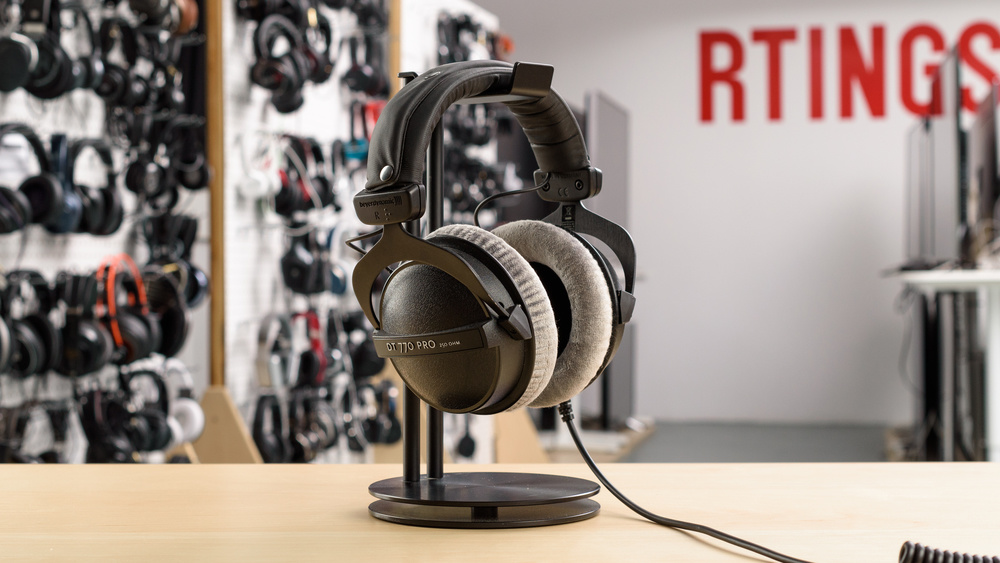
Studio headphones are tools, not accessories. In a professional production environment, a pair of headphones is an instrument for critical listening — a device that must reveal the truth about a recording without adding character, coloration, or excitement.
If you’re looking for the best studio reference headphones in 2026, you’re looking for one thing above all else: transparency. You need a headphone that exposes flaws, highlights mixing errors, and reveals the true tonal balance of a session so that you can make informed decisions.
This guide ranks the best studio-grade, audiophile-reference headphones in 2026, explains why “flat” isn’t a single target, and details why professional use cases mandate specific comfort and durability standards.
What Makes a Studio “Reference” Headphone?
Analytical Accuracy: A reference headphone should be “unflattering.” If a track has harsh high-frequency resonances, the headphone must expose them. If the bass is muddy and bloated, the headphone must clearly show that.
Imaging Precision: You must be able to locate instruments within the stereo field with absolute confidence. When you pan a vocal left or right, a reference headphone must reflect that change without ambiguity.
Low Distortion: Even at high volumes, a reference headphone must maintain low harmonic distortion. If the headphone itself is distorting, you won’t be able to tell if the recording distortion you hear is in the track or in the gear.
Durability: Studio equipment takes abuse. Replaceable pads, cables, and headbands are not “premium features”—they are requirements.
1. Sennheiser HD 800 S — The Gold Standard for Open-Back Transparency
Type: Open-back, dynamic
Sound Signature: Analytical-neutral
Best for: Mastering, critical mix referencing, spatial imaging
The HD 800 S remains the gold standard in 2026 for open-back transparency. Its massive 56mm dynamic driver, housed in an open-back design that avoids all rear-wave reflection, creates a soundstage that is more expansive and spatially accurate than essentially any other headphone.
The Sound: It is surgical. If you want to identify the acoustic space in which a jazz quartet was recorded, the HD 800 S will reveal the room reflections. The frequency response is incredibly linear, with no colored emphasis. The treble is detailed, airy, and extended, providing the “truth” about the high-frequency content of a mix.
Build and Professional Use: The construction is a high-tech plastic that is virtually indestructible and extremely light. The velour pads are the standard for long-term comfort.
Source Note: At 300Ω, this headphone is demanding. A high-output desktop amplifier is non-negotiable to reach the necessary headroom and dynamic performance for critical mastering work.
2. Beyerdynamic DT 1990 Pro — Precision for Mixing
Beyerdynamic DT 1990 Pro on Amazon
Type: Open-back, dynamic
Sound Signature: Neutral-analytical
Best for: Mixing, detailed production, editing
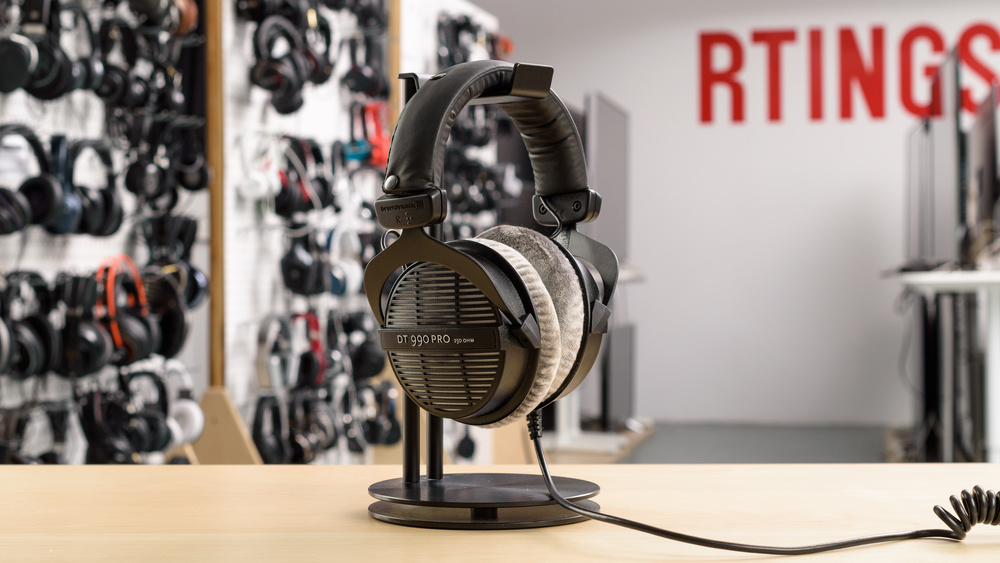
The DT 1990 Pro is Beyerdynamic’s high-end, studio-reference open-back. Unlike the V-shaped consumer models (like the DT 990 Pro), the DT 1990 Pro is tuned for a flat, analytical response that is designed specifically for mixing.
The Sound: It is precise, crisp, and articulate. The “Tesla” driver provides excellent transient speed and detail retrieval. Bass is tight, defined, and accurate. The midrange has enough presence to make mixing decisions about vocal clarity and instrument layering confident and easy. The treble is energetic — typical of Beyerdynamic — but it is refined and consistent, not peaky.
Build and Professional Use: Like all Beyerdynamic pro gear, this is built for abuse in Germany. The headband is rugged, the pads are plush velour, and every component can be individually replaced if it fails.
3. Focal Clear Mg Professional — Detail for Critical Listening
Focal Clear Mg Professional on Amazon
Type: Open-back, dynamic
Sound Signature: Neutral-reference
Best for: Detail-oriented critical listening, mix balancing
The Clear Mg Professional is Focal’s dedicated studio version of their flagship dynamic headphone. It uses the same magnesium “M”-dome driver architecture, re-tuned to provide a flatter, more professional response than the consumer-focused Clear Mg.
The Sound: The transient speed is extraordinary. If you’re working on projects with complex percussion, fast synths, or intricate string passages, the Clear Mg Professional will reveal details that slower dynamic headphones will smear. The tonal balance is exceptional — neutral, balanced, and tonally dense.
Build and Professional Use: Professional-grade build, with a focus on durability and comfort for long-term professional work. It includes pro-grade case and cable options.
The Role of Impedance Matching
Studio interfaces (Universal Audio, Focusrite, PreSonus) often have output impedances that affect the frequency response of headphones. As a general rule:
- Low-impedance headphones (e.g., Focal Clear Mg, 55Ω) are generally consistent across most interfaces.
- High-impedance headphones (e.g., HD 800 S, 300Ω) perform best on interfaces or dedicated amplifiers that can provide high output voltage without current clipping.
If you are mixing with high-impedance headphones on a basic interface, check the technical specifications for headphone output voltage to ensure you aren’t compressing the sound during crescendos.
For deep dives into source selection for your studio, read our guide to the best high-impedance headphones for 2026.
Final Verdict: Which One for the Studio?
- Mixing: If you need a reliable, indestructible mixing workhorse, the Beyerdynamic DT 1990 Pro is the industry standard.
- Mastering/Critical Listening: If you need the ultimate window into your track, the Sennheiser HD 800 S is the choice.
- Detail/Transient-Focused Mixing: If your production work requires intense detail and fast transient response, the Focal Clear Mg Professional is unrivaled.
Any of these three will transform your production workflow. When you move to reference-grade gear, you stop “guessing” what your mix sounds like and start “knowing” what it sounds like. That is the true value of audiophile studio headphones.