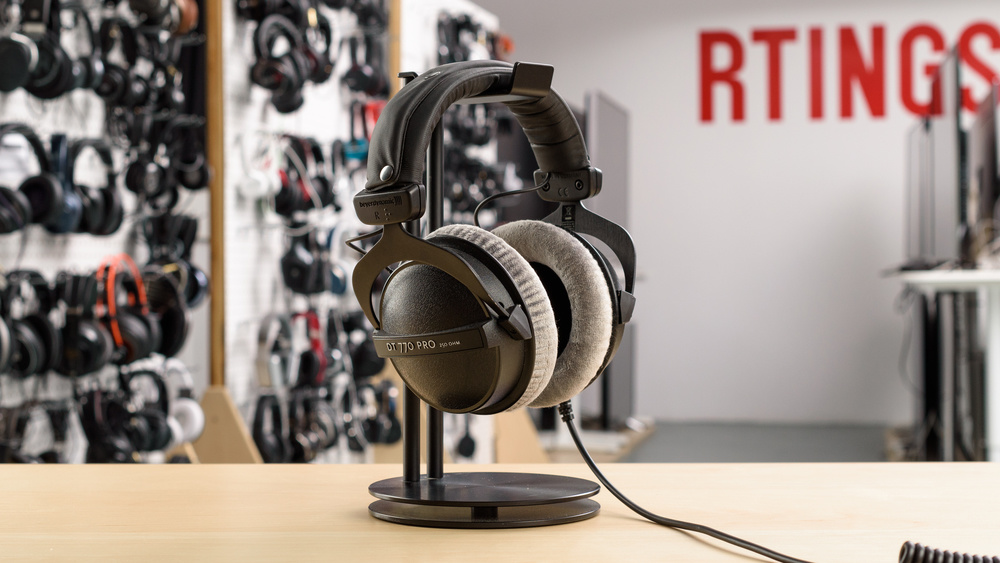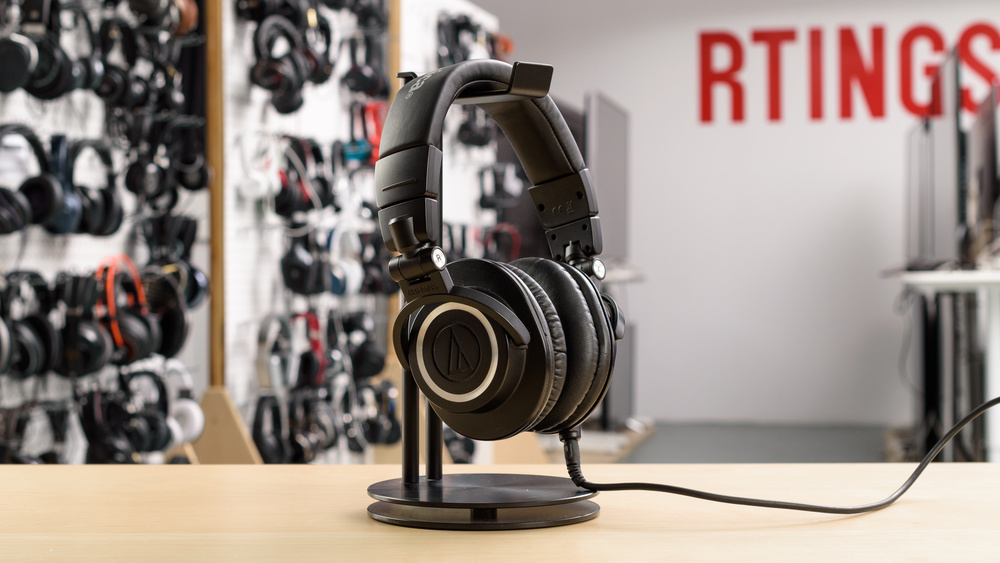
Two of the world’s most recognized “studio” headphone recommendations have been competing for the same buyer for years. The Audio-Technica ATH-M50x and the Beyerdynamic DT 770 Pro are closed-back, professional-leaning headphones that routinely appear on “best under $200” lists — and routinely get purchased by different types of buyers for different reasons.
In 2026, both remain relevant. Neither has been definitively supplanted. But they are significantly different headphones, designed with different priorities, and understanding those differences will save you from buying the wrong one.
At a Glance
| ATH-M50x | DT 770 Pro | |
|---|---|---|
| Driver | 45mm dynamic | 45mm dynamic |
| Impedance | 38Ω | 32/80/250Ω |
| Sensitivity | 99 dB/mW | 96 dB/mW (250Ω) |
| Frequency response | 15Hz – 28,000Hz | 5Hz – 35,000Hz |
| Weight | ~285g | ~270g |
| Fold | Yes (folds flat) | No |
| Cable | Detachable, 3 cables included | Fixed coiled cable |
| Pads | Pleather | Velour |
| Country of manufacture | Japan/Taiwan | Germany |
Audio-Technica ATH-M50x — The Portable Studio Workhorse
The Audio-Technica ATH-M50x launched in 2012 and quickly became the default “buy this first” recommendation in budget audiophile communities. Over a decade later, that recommendation has gotten somewhat stale — the market has evolved significantly — but the M50x itself remains a genuinely competent headphone.
Build and Design
This is the M50x’s strongest selling point: it folds completely flat, folds 90° for single-ear monitoring, and comes with three detachable cables (coiled, two different lengths of straight). The build is sturdy — a reinforced plastic chassis with metal in the hinges and adjustment joints — and it holds up well to daily use and travel. If you’re a performer or DJ who needs a monitoring headphone that will survive a gig bag, the M50x’s portability and durability make it practical in a way the DT 770 Pro simply isn’t.
The pleather earpads provide decent passive isolation — roughly 15–20 dB of attenuation — and create a firm seal. They are, however, less breathable than velour, which means heat and sweat buildup during long sessions. Pad fatigue is a real complaint among M50x users in warm environments.
Sound Signature
The ATH-M50x has a V-shaped, slightly bass-emphasized consumer sound signature. This is not flat studio monitoring — it is fun, engaging, and flattering on most commercial music.
Bass: Extended and moderately elevated. The low end has body and impact without being distorted or loose. Hip-hop, EDM, and pop music sound energetic and full. The midbass has a slight warmth that gives everything a sense of weight. For consumers who grew up listening to standard headphones, this feels natural and satisfying.
Midrange: The M50x’s midrange is its weakest point by audiophile standards. It is slightly recessed — the characteristic “V” that emphasizes bass and treble at the expense of the midrange. Vocals and acoustic instruments are clear enough to understand and enjoy, but they don’t have the natural, present character that flat-tuned headphones offer. For mixing vocals or judging tonal balance of voice recordings, this is a real limitation.
Treble: Extended and bright, with a crispness that pairs well with the elevated bass to create a sense of energy and clarity. The treble is less peaky and more consistently smooth than the Beyerdynamic DT 770 Pro’s — there are fewer sharp resonance peaks, which makes the M50x more comfortable for casual long-session listening despite the V-shaped tuning.
Soundstage: Closed-back, with fairly average soundstage width. The M50x doesn’t create much sense of space — instruments and sounds are grouped together rather than spread broadly. This is typical of closed-back designs and is not a specific M50x failing, but it means gaming or immersive listening use cases won’t benefit from wide staging.
Beyerdynamic DT 770 Pro — The German Studio Standard
The Beyerdynamic DT 770 Pro has been in production since 1985. That’s not marketing — it’s a statement about reliability and consistency. The current production version is functionally identical to what it was 20 years ago, which is either reassuring (it works) or a criticism (it hasn’t evolved) depending on your perspective.
Build and Design
The DT 770 Pro does not fold. It is a traditional, fixed-cup design with a self-adjusting spring steel headband that distributes clamping force evenly. It’s designed for desk use — for leaving on your head for an extended mixing session — not for throwing in a bag. The build quality feels noticeably more solid than the M50x: the steel and aluminum construction has a weight and substance that communicates durability. Beyerdynamic manufactures replacement parts (pads, cables, headband cushions, even drivers) for all their professional headphones — this is a headphone you can buy once and maintain indefinitely.
The velour earpads are a defining advantage. Velour is more breathable than pleather, doesn’t create a heat seal, and remains comfortable during extended wear. If you’re wearing headphones for 4+ hour sessions — mixing, editing, gaming — the velour pads are noticeably more comfortable than any pleather equivalent. The ear cups are large and deep, with ample room for most ear shapes.
Sound Signature
The DT 770 Pro has a V-shaped signature similar to the M50x, but executed differently. The bass is fuller, deeper, and more impactful. The midrange has a similar slight recession. The treble is brighter, more peaky, and more analytically detailed — but also more potentially fatiguing.
Bass: The DT 770 Pro’s bass is its most immediately impressive attribute. Deep sub-bass extension, strong midbass presence, and excellent impact. Kick drums, bass synths, and low-end elements have real authority that the M50x can’t quite match. The bass is controlled — not bloated or muddy — but it is clearly elevated above neutral. For music genres that live in the low end, this is a genuine pleasure.
Midrange: Similar to the M50x in that it’s recessed in the V-shaped tuning, though not severely so. The DT 770 Pro’s midrange has slightly better definition and separation than the M50x — individual instruments within the midrange are easier to pick apart. This is meaningful for mixing: even with the V-shaped overall tuning, the DT 770 Pro’s midrange transparency is better suited to studio monitoring than the M50x’s smoother, more consumer-flattering midrange.
Treble: This is the DT 770 Pro’s most controversial characteristic. The treble is bright, detailed, and has a well-documented peak around 10kHz. Cymbals, hi-hats, and high-frequency detail are rendered with crisp precision. For monitoring and detail-checking, this is useful. For extended casual listening, particularly at higher volumes, this peak can become fatiguing. Treble-sensitive listeners sometimes find the DT 770 Pro uncomfortable for long sessions despite the excellent earpads. EQ can tame the peak without dramatically altering the character.
Soundstage: For a closed-back headphone, the DT 770 Pro has a wider-than-average soundstage. It’s not the airy, speaker-like presentation of an open-back design, but instruments are arranged with more definition and separation than the M50x provides.
Head-to-Head: The Key Differences
Comfort and Wearability
Winner: DT 770 Pro for long sessions. The velour pads don’t create heat buildup, and the auto-adjusting headband is effortless. The M50x wins on portability and folding — for travel or performance use, it’s more practical.
Sound Quality
Winner: DT 770 Pro by a meaningful margin. The bass is more extended, the treble is more detailed, the midrange has better separation. The M50x’s smoother, more consumer-friendly tuning sounds “good” but lacks the technical precision of the DT 770 Pro for monitoring purposes.
Portability
Winner: ATH-M50x — it folds, it comes with multiple cables, it’s lighter and more bag-friendly. There’s no competition here.
Build Durability
Draw. The M50x has a removable cable system (significant advantage — cables fail), solid build for the price, and proven durability. The DT 770 Pro has officially replaceable parts including drivers, which makes it more serviceable long-term. Both are genuinely sturdy.
Source Requirements
Winner: ATH-M50x for ease of use. At 38Ω and 99dB sensitivity, it drives well from essentially any source. The DT 770 Pro’s 80Ω or 250Ω variants benefit significantly from a proper amplifier.
Value for Studio Use
Winner: DT 770 Pro — the sound signature, isolation quality, and durability are better matched to extended professional use. The M50x is better suited to consumer applications with its more portable, fun-tuned profile.
Which Should You Buy?
Buy the ATH-M50x if:
- You need a headphone you can take everywhere — gigs, commutes, travel
- You want something that sounds enjoyable immediately from any source with no amplifier required
- You prioritize portability and convenience over maximum sound quality
- You primarily listen to pop, hip-hop, or electronic music and want engaging, fun presentation
Buy the DT 770 Pro if:
- You’re primarily desk-based and doing studio work, gaming, or long editing sessions
- Long-session comfort is a priority — the velour pads are a genuine differentiator
- You want better monitoring accuracy and technical sound quality
- You have or plan to buy a DAC/amp and want a headphone that rewards better source equipment
- You’re comparing these as a step up from the Sennheiser HD 560S in closed-back form factor
If you like the comfortable, detailed sound of the Sennheiser HD 560S but need the isolation of a closed-back design, the DT 770 Pro is the natural answer — brighter and more V-shaped than the HD 560S, but with the same build philosophy of long-session durability.
Frequently Asked Questions
Q: Is the ATH-M50x actually good for studio mixing? A: It’s acceptable but not ideal. The V-shaped, mid-recessed tuning means you’ll overemphasize bass and treble in your mixes if you’re making EQ decisions from the M50x alone. Professional mixers who use it typically use it as a cross-reference tool alongside other monitors, not as their primary mixing headphone.
Q: Does the DT 770 Pro need an amplifier? A: The 32Ω version works fine from a phone or laptop. The 80Ω version benefits from a decent dongle DAC or DAC/amp. The 250Ω version should not be bought without a proper amplifier — it will sound thin and quiet without one.
Q: Which is better for gaming? A: The DT 770 Pro — wider soundstage, better bass extension for cinematic impact, and better overall sound detail. However, the open-back DT 990 Pro is better still for gaming in a quiet room.
Conclusion
In 2026, the ATH-M50x and DT 770 Pro occupy overlapping but distinct niches. The M50x is the better portable companion — it folds, it’s versatile, it sounds good from any source. The DT 770 Pro is the better desk headphone for serious work — more comfortable long-term, more technically detailed, more revealing, and more accurately tuned for professional monitoring. Neither is wrong; they’re designed for different lifestyles. Identify which type of listener you are before you buy.
For more, read Beyerdynamic DT 770 Pro vs DT 990 Pro for the open vs. closed decision within the Beyerdynamic lineup.