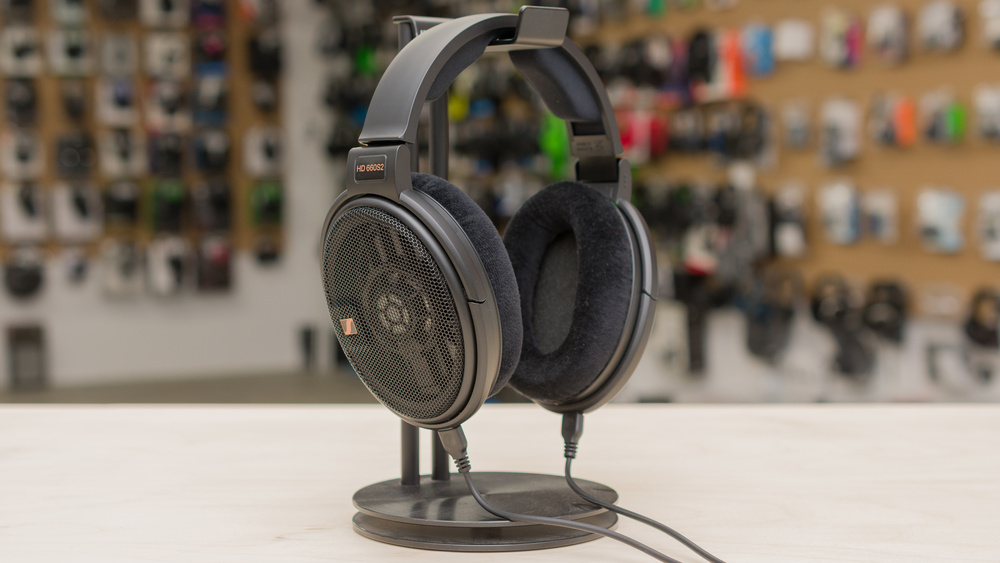
Sennheiser’s 600-series headphones have defined the audiophile midrange for nearly three decades. The HD 600, introduced in 1997, remains one of the most consistently recommended headphones in the entire hobby—a benchmark that newer products get measured against regardless of price. The HD 660S2, launched in 2022 as Sennheiser’s most ambitious evolution of the 600-series formula, represents the company’s clearest statement about where the platform can go when they’re willing to make genuinely significant changes.
This isn’t a minor spec bump. The HD 660S2 introduces a new driver design, extends bass response meaningfully, and lowers impedance from 300 ohms to 150 ohms. Whether those changes justify the substantial price premium over the HD 600 depends entirely on what you want from a headphone.
Specifications Comparison
| Spec | HD 600 | HD 660S2 |
|---|---|---|
| Transducer | Dynamic, open-back | Dynamic, open-back |
| Impedance | 300 Ω | 150 Ω |
| Sensitivity | 97 dB SPL / 1V RMS | 104 dB SPL / 1V RMS |
| Frequency Response | 12 – 40,500 Hz | 8 – 41,500 Hz |
| THD | < 0.1% | < 0.1% |
| Weight | 260 g | 260 g |
| Cable Termination | 6.35mm (with 3.5mm adapter) | 4.4mm balanced + 6.35mm unbalanced |
The impedance change is significant. At 150 ohms, the HD 660S2 is considerably easier to drive loud from lower-powered sources—you can get reasonable performance from a decent portable DAC/amp in a way that the HD 600 simply doesn’t allow. The sensitivity advantage (104 vs 97 dB SPL/V) compounds this: the HD 660S2 needs roughly half the amplifier power to reach the same listening volume.
The extended bass response—8 Hz versus 12 Hz—matters less as a standalone number than it might appear; the practical audibility of 8–12 Hz sub-bass depends heavily on the recording and the rest of the driver’s behavior through that range.
Design and Build: What Changed, What Didn’t
Externally, the HD 660S2 maintains the classic 600-series aesthetic with refinements. The headband mechanism, velour earpads, and detachable cable system are evolutionary improvements rather than departures from the established template. The weight remains 260g—genuinely light for an audiophile open-back headphone.
The most notable physical change is the cable configuration. The HD 660S2 ships with both a 4.4mm balanced cable and a 6.35mm unbalanced cable, acknowledging that balanced output has become a meaningful feature even at mid-range price points. The HD 600 ships with a 3-meter unbalanced cable only.
The new driver architecture inside the HD 660S2 features an improved diaphragm with lower resonance and a redesigned magnet system—the specifics of which are discussed in Sennheiser’s technical documentation but manifest most clearly in the extended bass performance and improved micro-dynamic resolution compared to the HD 600.
Sound Signature: HD 600
The HD 600 remains the benchmark. Its defining characteristic is midrange accuracy—a precise, unflattering reproduction of vocals and acoustic instruments that mixing engineers have relied on for decades. The frequency response through the 1–4 kHz midrange is textbook reference, with just enough presence-region emphasis (around 3.5 kHz) to keep vocals from sounding distant or veiled.
Bass: Tight, controlled, and honest. Not emphasized. Bass extends cleanly but doesn’t go out of its way to make bass-heavy music feel weighty or physical. Sub-bass rolls off gently below 30 Hz.
Midrange: The HD 600’s strongest suit. Voices are naturally forward, detailed, and easy to parse. The tonal accuracy here is the reason this headphone is still in professional use.
Treble: Mostly smooth with some minor 6–8 kHz peaks. Detailed and extended without being harsh, though some listeners with treble sensitivity may notice occasional brightness on specific recordings.
Soundstage: Moderate width with excellent three-dimensional imaging. Not the widest presentation in this price range, but precise and well-organized.
Sound Signature: HD 660S2
The HD 660S2 retains the 600-series family character while departing from it in meaningful ways. The tuning is immediately recognizable as a Sennheiser: accurate, controlled, and technically coherent. But the bass extension and the improved driver response create a presentation that feels more complete—especially for modern recorded music where low frequencies carry significant musical information.
Bass: This is the most audible improvement over the HD 600. The HD 660S2’s bass extends deeper with more authority and texture in the 30–80 Hz sub-bass region. It’s not a bass-boosted headphone—the bass is still precise and controlled—but it has genuine low-frequency extension that the HD 600 doesn’t match. Electronic music, orchestral music, and anything recorded with significant low-end information sounds more complete.
Midrange: On par with the HD 600 in tonal accuracy, though some listeners find the HD 660S2’s midrange is very slightly less forward due to the improved bass balance. Vocals remain natural and well-reproduced.
Treble: Smoother than the HD 600, with fewer pronounced peaks through the 6–8 kHz range. The HD 660S2 is a more forgiving headphone with bright recordings without sacrificing high-frequency detail. Air and extension remain strong.
Soundstage: Comparable to the HD 600 in width, possibly with slightly better depth reproduction due to the revised driver behavior. Imaging remains precise.
Amplification: A Meaningful Difference
The impedance gap between these headphones matters practically. The HD 600’s 300 ohms demands a desktop amplifier with genuine voltage swing. Running it from a phone or a modest portable DAC results in distortion at reasonable listening levels and a flat, lifeless sound.
The Sennheiser HD 600 belongs on a desktop with something like a Topping DX3 Pro+, FiiO K7, or better.
The Sennheiser HD 660S2 at 150 ohms is more flexible. It sounds good from a high-quality portable DAC/amp and excellent from the same desktop amplifiers that serve the HD 600. The included 4.4mm balanced cable means users with balanced desktop amps can immediately take advantage of the improved channel separation that balanced operation provides.
Both headphones benefit from quality amplification—the HD 660S2 simply doesn’t suffer as badly from inadequate sources.
Who Should Buy the HD 600?
- Mixing engineers and critical listeners who want a proven reference tool
- Anyone primarily listening to acoustic music, classical, jazz, or vocal-centric genres
- Budget-conscious audiophiles who want the best midrange accuracy per dollar
- Those with existing 300-ohm capable amplifiers who don’t want to repurchase equipment
- Listeners who prefer a slightly crisper, more present treble presentation
Who Should Buy the HD 660S2?
- Anyone who wants the 600-series sound character with meaningfully extended bass
- Listeners who also consume modern genres like electronic, R&B, or cinematic orchestral music
- Those who want flexibility to drive their headphones from both desktop and quality portable sources
- Balanced output users who want to maximize the headphone’s technical performance
- Anyone for whom treble smoothness is a priority over a slightly brighter presentation
Who Should Buy Neither?
- Closed-back seekers—both are fully open-back and unsuitable for quiet environments
- Bassheads expecting consumer-level low-frequency emphasis
- Anyone without a proper amplifier who plans to run these from a laptop or phone
Pros & Cons
HD 600
Pros:
- Legendary midrange accuracy at a price well below comparable competition
- Widely regarded as a reference benchmark—critical listening standard
- Light, comfortable, and durable for long sessions
- Massive aftermarket support: cables, pads, extensive community knowledge
Cons:
- 300 ohms requires a proper desktop amplifier—not portable-friendly
- Bass extension is limited compared to the HD 660S2
- Ships with only a single unbalanced cable
- No balanced output option without aftermarket cables
HD 660S2
Pros:
- Genuine bass extension improvement over all previous 600-series headphones
- 150 ohms makes it more versatile with different amplifier types
- Ships with both balanced and unbalanced cables
- Smoother treble response that’s more forgiving of imperfect recordings
- Improved driver delivers better micro-dynamic resolution
Cons:
- Significantly more expensive than the HD 600—the premium is real
- Midrange character, while still excellent, is very slightly less “in your face” than the HD 600
- Not a dramatic upgrade for listeners who primarily listen to vocal and acoustic music where the HD 600 already excels
Frequently Asked Questions
Q: Is the HD 660S2 worth the extra cost over the HD 600?
For listeners who primarily enjoy acoustic music, classical, and jazz, the HD 600 remains the better value—the HD 660S2’s primary improvements (bass extension and treble smoothness) matter less for those genres. For listeners who consume a wider range of music, including anything with significant bass content, the HD 660S2’s improvements are genuinely audible and worth the premium.
Q: Can the HD 660S2 replace a separate subwoofer or headphone with dedicated bass?
No. The HD 660S2 has improved bass extension for an open-back headphone, but it is not a bass-heavy headphone and doesn’t replicate the physical impact of speakers or a V-shaped headphone tuning. It offers accuracy and extension—not emphasis.
Q: Do I need a balanced DAC/amp to take full advantage of the HD 660S2?
Not strictly—the HD 660S2 sounds excellent through its unbalanced 6.35mm cable as well. Running balanced provides marginal improvements in noise floor and channel separation that are most appreciable in quiet passages of complex recordings. The balanced cable is a nice inclusion, but the headphone’s quality is not dependent on it.
Conclusion
The HD 600 and HD 660S2 are both exceptional headphones from the same family, tuned with the same philosophy but executed with different priorities. The HD 600 offers the purest midrange accuracy at a price that continues to represent outstanding value. The HD 660S2 takes the core formula and adds the things the HD 600 was always missing: genuine bass extension, a smoother treble, lower impedance for broader source compatibility, and balanced output capability.
If you’re building a desktop system anchored around vocal and acoustic music, the HD 600 is still the correct choice. If you want the full 600-series experience without its historical limitations, the HD 660S2 delivers—and does so without abandoning the character that made the platform legendary.