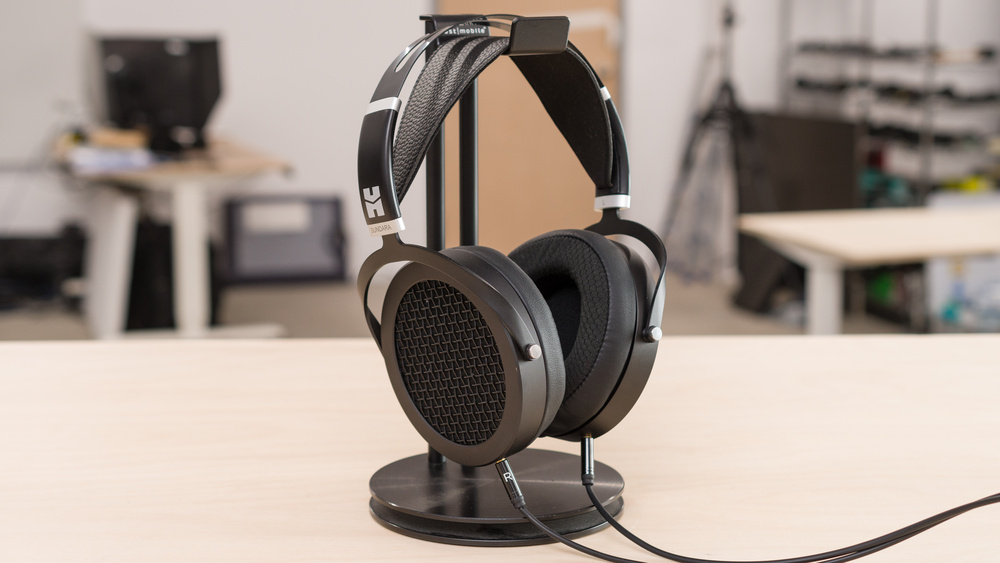
Once the core gear is sorted — DAC, amplifier, headphones — there is a category of accessories that genuinely improve the daily listening experience without costing a fortune. These are not snake oil tweaks or audiophile mythology. They are practical items that protect your equipment, improve ergonomics, and make a listening session more comfortable and organized.
This guide covers the accessories worth buying in 2026, with honest explanations of why each one matters.
Headphone Stands
Why You Need One
A headphone stand keeps your headphones off the desk surface, preventing the ear pads from deforming under their own weight. Properly shaped headphone pads have a significant impact on both comfort and sound — a pad that has been compressed flat against a surface for weeks will feel and sound different from a pad maintained in its natural domed shape. This is especially relevant for sheepskin or protein leather pads on Sennheiser and Beyerdynamic headphones.
A stand also keeps your headphones accessible. Headphones left in a bag or drawer tend to get scratched; headphones on a stand are ready to use.
What to Look For
- Adjustable height: Allows the stand to accommodate different headphone sizes without the headband touching the base
- Non-slip base: Prevents the stand from sliding off desks (weighted aluminum bases are best)
- Arm material: Soft padding on the headband contact point prevents finish wear
- Single vs. dual mount: If you own multiple headphones, a dual stand saves significant desk real estate
Quality headphone stands on Amazon
Recommended type: A weighted aluminum single-arm stand with adjustable height and a padded top. Expect to pay $20–$60. Aluminum looks better and lasts longer than the plastic stands that come pre-bundled with budget desk accessories.
Ear Pad Replacements
Ear pads are the most consumable part of any headphone. Protein leather (synthetic leather) typically lasts 1–3 years before it cracks or peels. Real leather and velour pads last longer but still eventually compress. Replacing pads is the highest-impact maintenance action in headphone ownership.
Replaced ear pads often restore a headphone that has gradually drifted toward thin-sounding over time (compressed pads reduce the acoustic volume of the ear cup, changing the frequency response). This is documented and measurable.
Major pad suppliers:
- Dekoni Audio: Known for premium-grade sheepskin, velour, and hybrid pads for Sennheiser, Beyerdynamic, HiFiMAN, Audeze. Their “Choice” series is an excellent middle-ground option. Expect $40–$80 per pair.
- Brainwavz: More affordable than Dekoni, consistent quality. Good for Sennheiser HD and AKG headphones. $20–$40 per pair.
- Stock replacements: For Beyerdynamic (DT 990/1990) and Sennheiser (HD 600/650/800), official replacement pads are available directly and are usually worth the price to preserve the original voicing.
Note: Changing pad material changes the sound. Velour pads tend to open up the sound and add air in the treble compared to leather pads on the same headphone. If you replace pads and the sound changes significantly, the pad material is likely different from original. This is a feature for some listeners.
Cable Management
Why It Matters Beyond Aesthetics
Exposed cables on a desk snag on peripherals, pull at DAC/amp inputs, and create mechanical stress at connector joints. Over time, this causes intermittent channel dropouts and connector failure. Proper cable management extends the life of your equipment and reduces the number of “one channel is cutting out” troubleshooting sessions.
Practical options:
- Cable management clips: Adhesive-backed clips that route cables along desk edges and behind monitors. A $10 pack transforms a cable jungle into an organized setup.
- Cable sleeves: Neoprene or braided fabric sleeves that bundle multiple cables together. Particularly useful for routing power cables and USB cables from an amp stack to a power strip.
- Cable risers: Vertical cable organizers that keep cables off the floor, preventing foot-snagging and desk-cable abrasion. Less critical for pure headphone setups but essential if you also have speakers.
For audiophile setups specifically: keep analog RCA cables away from power supplies and USB cables. Electromagnetic interference from digital cables picked up by analog cables is a real phenomenon. Physical separation of a few centimeters is sufficient.
Cleaning and Maintenance
Microfiber Cloths
Microfiber cloths on Amazon
The single most cost-effective accessory on this list. High-quality audio equipment accumulates fingerprints, dust, and skin oil constantly. Aluminum surfaces show fingerprints immediately; glass and glossy finishes show dust. A quality microfiber cloth — different from the cheap ones included with random electronics — removes smears without scratching.
Buy a multi-pack of premium microfiber cloths and designate one specifically for audio equipment. Keep them clean. Replace annually. Cost: $10–$15 for a good multi-pack.
Contact Cleaner
If you own gear with RCA connectors or 3.5mm jacks, a contact cleaner like DeoxIT D5 is one of the most useful tools you can own. Oxidized contacts cause subtle high-frequency losses and intermittent crackle. A spray of DeoxIT on RCA plugs and a few connection/disconnection cycles removes oxidation and restores clean contact.
Particularly relevant for vintage equipment or gear that has been in storage, but also useful for preventive maintenance on new equipment that gets heavy use.
DAC/Amp Isolation Pads
Isolation pads sit under your DAC and amplifier, decoupling them from the desk surface. The claimed benefit is reduced mechanical feedback from speakers or ambient vibration. For headphone-only setups, the benefit is mostly aesthetic — it makes the equipment look purposeful and prevents desk scratches.
For users who also run desktop speakers alongside headphones, isolation pads can meaningfully reduce vibration coupling between speaker cabinets and sensitive DAC circuitry. Sorbothane (a viscoelastic polymer) pads are the standard choice.
Isolation pads on Amazon — Expect to pay $15–$40 per set.
USB Cables and Power Supplies
This section is where audiophile accessory culture goes off the rails. $200 USB cables, $500 “audiophile-grade” power supplies, LAN isolators for Ethernet streaming. Most of these are expensive solutions to problems that do not exist in well-designed DACs.
The reasonable exception: USB cables that are too long or too cheap can cause USB enumeration errors that result in dropouts, especially with high sample-rate audio (DSD256, PCM 768 kHz). A quality short USB cable (< 1m, certified USB 2.0, good shielding) costs $10–$20 and is worth buying for reliability, not for “audiophile sound.”
iFi iDefender / iSilencer: These USB noise isolators ($50–$80) address a specific, real problem: ground loops between PC USB ports and audio equipment that manifest as a 50/60Hz hum. If you have a hum in your system and a USB iDefender eliminates it, that is a legitimate fix. Do not buy one preemptively.
Headphone Cases and Storage
For portable headphones that travel frequently, a case is non-negotiable. Exposed headphones in bags develop scratched cups, bent headbands, and damaged cables. Specific recommendations:
- Semi-rigid carrying case: The best middle ground between protection and packability. Pelican 1495 for full-sized headphones; manufacturer-supplied cases for mid-sized portables.
- Headphone bag: Softer, lighter, less protective. Fine for gym use with durable headphones; not for travel with $500+ headphones.
Many high-end headphones (Focal Clear Mg, ZMF models, Audeze) come with excellent cases included. If yours did not, contact the manufacturer — OEM cases are usually available.
Pros & Cons: The Accessory Hierarchy
| Accessory | Value | Priority |
|---|---|---|
| Headphone stand | High — protects pads, improves ergonomics | Essential |
| Ear pad replacement | High — restores frequency response | As needed |
| Microfiber cloths | High — maintains appearance | Essential |
| Cable management | Medium-high — protects connectors | Recommended |
| Contact cleaner | Medium — maintenance for connectors | As needed |
| Isolation pads | Low-medium — marginal sonic benefit | Optional |
| USB noise isolator | Medium — fixes specific hum issues | If applicable |
| Audiophile USB cables | Low — marginal at best | Not recommended |
| Boutique power supplies | Very low — diminishing returns | Not recommended |
FAQ
Q: Do I need an expensive power conditioner for my desktop audio setup? For a straightforward desktop audio setup (DAC, amp, headphones), a quality power strip with surge protection is sufficient. A power conditioner is worth considering if you have audible hum from grounding issues, are in an area with unstable power supply, or if you are running speaker amplifiers in a noisy electrical environment. For headphone listening alone, the benefit is marginal to nonexistent.
Q: How often should I replace ear pads? When they show visible cracks, peeling, or significant compression that does not recover after a day off the headphone. For protein leather pads, this is typically every 1–3 years depending on use frequency. Velour pads last longer but compact over time, changing the headphone’s bass response. Test by pressing on the pad with your finger — if it does not spring back, it is time to replace.
Q: Does cleaning affect the sound of connectors? Yes, in a specific scenario: heavily oxidized connectors (visible green or brown discoloration, or audible crackle when connecting/disconnecting) genuinely degrade high-frequency signal transmission. DeoxIT D5 contact cleaner resolves this. For clean, well-maintained equipment, cleaning is a maintenance task, not a sound upgrade.
Conclusion
The best accessories are the ones you actually use every day. A headphone stand that makes your gear accessible and protects your pads is worth more than an expensive boutique cable. Microfiber cloths and proper ear pad replacement maintain your investment for years. Cable management prevents the one connector failure that causes a frustrating mid-session dropout.
Don’t neglect the little things — they make a genuine difference in the longevity and daily enjoyment of your setup, even if they do not appear in frequency response graphs.